Oaks of Glory
  • Home
  • Halley Faville
  • Jeff Faville
  • Oaks Canyon Youth
    • Youth Sign-Up/Forms
    • How You Can Help!
  • Beth Bearden
  • About
  • Contact
  • Resources
  • Recommended Blogs

Love.Listen.Live.

8/9/2024

0 Comments

 
Picture

The multitude of believers was one in heart and soul. No one claimed that any of his possessions was his own, but they shared everything they owned. With great power the apostles continued to give their testimony about the resurrection of the Lord Jesus. And abundant grace was upon them all.
There were no needy ones among them, because those who owned lands or houses would sell their property, bring the proceeds from the sales, and lay them at the apostles’ feet for distribution to anyone as he had need.
Joseph, a Levite from Cyprus, whom the apostles called Barnabas (meaning Son of Encouragement), sold a field he owned, brought the money, and laid it at the apostles’ feet. Acts 4:32-37

Love.

    At the end of Acts 3 we find the church, alive, thriving, growing and reproducing.  It is in absolute unity.  They are one in heart and soul.  They are listening and actively obeying the Apostles’ teachings on the Word of God.  They are in koine  with one another, sharing generously all that they have because they are in common equality with one another in the gospel. Because of Jesus’ ultimate sacrifice to bring fallen humanity back into a loving relationship with their Creator God, the Church had become a return to the paradise of God, the Garden of Eden—the Garden of Delights.  It is what God has made us for—an equality and love with one another that shares and gives out of love.  Everything in this Garden is for the common good of all.  Their attitude toward one another is “how can we ensure that each of us is thriving and rejoicing in God’s goodness?” 
     The Church was a new creation.  It was a new beginning, where the old, dead, stony heart of people was replaced with a living heart: one that wanted to love and please God; one that was willing even to lay down one’s own life for one another. 
     While the one command in the Garden to humanity was “do not eat of the fruit of the tree of the knowledge of good and evil,” God knew that the very reason we chose to disobey that command was a lack of love for God.  As a result, God gave a new command, the greatest command of all.  It was one that would give us a reason to choose to walk in obedience: love for God. 
     This command the Israelites were to recite every morning and evening.  It was to be their first thought before starting their day and their last upon ending it:
​

Listen, O Israel: The Lord our God [plural\, the Lord is One. Love the Lord your God with all your heart and with all your physicality [nephesh\ and with all your everything [me'od\. 
​Deuteronomy 6:4-5

     Because God the Father, the Son and the Holy Spirit are One, we are to be one in our unity and love.  The Church was now obeying God’s command to love Him and love their neighbor with all their heart, all their soul and all their strength, unified in its focus.  When we love, we automatically choose to do things that are in line with God’s laws and commands because genuine love comes from God and aligns with His purposes for His people.  Like God, we naturally start to choose what would be good and best for others, even at our own cost.
     God wants our whole, entire selves—our hearts, everything that we feel and make decisions on; our nephesh (often translated souls, it more accurately is our physical body), every part of our physical humanity, desires and appetites; and our me’od, our ability in every circumstance to be wholly and completely given back to God in complete love and trust for our Creator. 
     While we find ourselves drawn to stay in this delightful fellowship of the Church, into this perfect Garden we see the plot begin to thicken: 
​

Now a man named Ananias, together with his wife Sapphira, also sold a piece of property. With his wife’s full knowledge, he kept back some of the proceeds for himself, but brought a portion and laid it at the apostles’ feet.
Then Peter said, “Ananias, how is it that Satan has filled your heart to lie to the Holy Spirit and withhold some of the proceeds from the land? Did it not belong to you before it was sold? And after it was sold, was it not at your disposal? How could you conceive such a deed in your heart? You have not lied to men, but to God!”
On hearing these words, Ananias fell down and died. And great fear came over all who heard what had happened. Then the young men stepped forward, wrapped up his body, and carried him out and buried him.
Acts 5:1-5

Listen.

     Cue the villain.  
     Into this Garden, this New Creation, this paradise of love and goodwill and kindness, we find evil creeping in. 
   The Serpent is back. 
    The very Hebrew letters used to spell out the serpent’s name, nachash 
נָּחָ֑שׁ, describe the kind of adversary we face continuously: 

נָּ nun: life/son/heir/seed
חָ֑ chet: divide/cut/separate
שׁ shin: teeth/two/devour/consume

"One who devours an heir in order to divide and cut off life"

his name, satan שָּׂטָ֛ן, is similar in meaning: 

שָּׂ shin: teeth/two/devour/consume
טָ֛ tet: basket/surround/ensnare
ן nun: life/son/heir/seed

"One who surrounds life in order to ensnare and devour it."

     The serpent's plan not a new scheme; it’s a very ancient one.  In fact, he must have thought, ‘it worked last time!’  

    In fact, that ancient serpent has been waiting to devour life from the beginning and continues even now.  But he will never win!
​

...And the dragon stood before the woman who was about to give birth, so that when she bore her child he might devour it. She gave birth to a male child, one who is to rule all the nations with a rod of iron, but her child was caught up to God and to his throne,...Now war arose in heaven, Michael and his angels fighting against the dragon. And the dragon and his angels fought back, but he was defeated, and there was no longer any place for them in heaven. And the great dragon was thrown down, that ancient serpent, who is called the devil and Satan, the deceiver of the whole world—he was thrown down to the earth, and his angels were thrown down with him. And I heard a loud voice in heaven, saying, “Now the salvation and the power and the kingdom of our God and the authority of his Christ have come, for the accuser of our brothers has been thrown down, who accuses them day and night before our God. And they have conquered him by the blood of the Lamb and by the word of their testimony, for they loved not their lives even unto death. Rev. 12:4-11

     Listening, as the Greatest Command says, involves more than just allowing the sound or voice or someone to enter our ears.  It encompasses hearing, understanding, and taking action that follows through with the intent of the speaker.
     The Bible tells us that we become slaves or servants to the one we listen to and obey:
​

​Don’t you know that when you offer yourselves to someone as obedient servants, you are servants of the one you obey—whether you are servants to sin, which leads to death, or to obedience, which leads to righteousness?
​Rom. 6:16

​     The serpent roams around seeking to find people to listen to his voice, to become his slaves, so that he can accuse us before God.  In Acts 5, Ananias wasn’t listening to God’s command to love.  His motivations for participating in the selling of his property, inaccurate donation and lies were all rooted in a desire to gain something for himself rather than serving the crucial needs of those around him. Just as Eve listened to the voice of the serpent and saw that the fruit was “good for success,” he wasn’t just withholding some of the value of the land.  He was withholding himself from His Creator.  What he was bringing to God was representing the value that he placed upon God and his relationship to Him.  His giving was only as a show to everyone else.  Barnabas had given out of the gratitude and love of his heart; Ananias was giving in order to get something out of them all.  It wasn’t a gift of love. 
     While neither Ananias nor we have an obligation to sell all our property and give it all away, when we see people in need our Spirit-filled response should be a desire to ask the Lord how we can give out of the great abundance that He has entrusted to us.  God wants our whole selves, nothing withheld.  He wants us to listen and respond to Him in this love by giving Him our whole selves in every moment, obeying every Word that He speaks to us.  This will often “cost” us, sometimes a great amount.  But it is never even close to the incredibly abundant grace that He has given us.
     In the Garden, the serpent came and deceived the woman, telling her that she would not die.  When she decided to eat the fruit, her body, her nephesh, did not die immediately.  Her spirit, however, did.  When Adam agreed with her to eat, his spirit also passed from life into death. Into their bodies, their nephesh, however, death entered as a slow and inevitable process.
     After they sinned, when they heard God’s voice in the Garden, they were no longer in loving fellowship with God.  As a result, they were afraid and hid from His faces (panim). 
    In Hebrew, the word for “hide” is chabah
חָבָא. 

חָ chet: divide/cut off/wall off
בָ beit: house/household/family
א aleph: ox/strong leader/God the Father/first

    In choosing to hide from God and wrapping themselves in fig leaves, trying vainly to cover up their own shame and sin, they were effectively causing themselves to be cut off and divided from the household of their loving, heavenly Father.  This was exactly what the serpent had intended: to ensnare and to cut off life and the heirs from the inheritance of the Father. 
    However, at the voice of God, Adam and Eve together made a decision to come out of hiding.  They presented themselves before God the Father and confessed to Him what they had done.  The Word in Hebrew, “confess,” (todah
יָדָה) means to cast or throw down something, to be lifted up to enter through the door and behold. It is an accurate accounting, a numbering of our sins according to how we have transgressed the loving commands of God. Conversely, the word also means to give thanks or praise.  In essence, when we confess our sins to our Father, we are doing it in gratitude that He has provided forgiveness and justification through the Door, His Son, Jesus.  We are casting away our sins, the ones that ensnare and enslave us, and throwing our thanks at His feet in humble gratitude as we are brought back into the household as a family member.
​    In response to Adam and Eve's confession, in His grace God provided a covering for their clothing.  A blood sacrifice was made so that humanity could be covered, symbolically representing the sacrifice of Jesus’ blood that would be given to cover over our sins for all eternity. 

     Sadly, Ananias did not have a heart that would receive this grace. 
    Ananias.  His name means, “Grace of God.”  It is what God intended and willed for him, but not something he chose to receive for himself.    
     The Apostle Paul makes it clear in Romans how we should not take God’s grace lightly, as if it is not costly.  It is precious and extremely valuable.  It is the blood of our Savior given for the world.  When we continue to live a lifestyle of practicing sin without listening and obeying God, we trample the grace of God under our feet:
​

Shall we continue in sin that grace may abound?  Certainly not!
Romans 6:1 
​
Or do you show contempt for the riches of God’s kind grace, forbearance and mercy, not realizing that it is his kind grace that leads to repentance?
 Romans 2:4 

​     This kind of contempt for God’s grace is the kind of evil that comes when people want the free blessings of God but are only using the Church as a way to gain for themselves selfishlessly.  They think that God will not see, but He certainly does.  Just as He saw Adam in the Garden, hiding, He also sees the true heart motivations of all of us.  None of us can hide from the eye of His faces.   
     Ananias’ response to the extreme grace and kindness of God was to despise it, to withhold from God His very self, and to lie instead of to confess and thank God for His grace.  As a result, he stayed hidden, separated and cut off from the family of God.  

About three hours later his wife also came in, unaware of what had happened. “Tell me,” said Peter, “is this the price you and your husband got for the land?”
“Yes,” she answered, “that is the price.”
“How could you agree to test the Spirit of the Lord?” Peter replied. “Look, the feet of the men who buried your husband are at the door, and they will carry you out also.”
At that instant she fell down at his feet and died. Then the young men came in and, finding her dead, carried her out and buried her beside her husband.
Acts 5:7-10
​

​     Sapphira. In Hebrew, her name means “scribe,” or “accountant.”  A saphar סָפֵר was one who would render an accurate accounting of the saphan סָפַן: the treasures that had been covered and hidden. The scribes were entrusted with the task of ensuring that the hidden, covered treasures in the storeroom or the message of the word of the king would be accurately relayed to the people. 
     In this part of the passage, the word “price” or “valuation” comes up repeatedly.  The word is Tinos, and it means value, weight or honor.  Agreeing with her husband, Sapphira purposely and inaccurately rendered an account of the value or the land.  God also had given her a part, one who would accurately call to account the treasures He had entrusted to them for the benefit of His people.  She, in her own turn, would choose to willfully turn away from listening and obeying God’s voice because she also lacked love for God and others. 
     In the advent of the Church, the spiritual rebirth and resurrection of God’s people, the deaths of both Ananias and Sapphira would represent physically the spiritual death that was already inherent inside of them.  Their outward death only mirrored their inward death. 
    Ananias and Sapphira’s deaths were merely a physical representation of their spiritual, inward reality.  They were already dead in their spirits.  They had chosen to listen to the voice of the Serpent.  It wasn’t about who messed up first, it wasn’t about whose idea it was.  It was that they both agreed to be unified in their disobedience to God. 
            In addition, God wanted to be very clear about our individual responsibility to listen and obey His voice.  In the Garden, God reprimanded Adam because he “listened to the voice of [his] wife” instead of to God’s voice.  To some, the curse and the fall feels like it lands unfairly on humanity because of the woman’s choice.  God is setting the record straight:  this time it the choice is first the husbands, followed by his wife’s agreement. 
            Both of them, however, in each case, are listening to the voice of the Serpent. It goes both ways.  The point of this reversal is that at the heart of it all they are listening and obeying the voice of the serpent.
 
Woman
         Man
            Serpent
         Man
Woman
 
    They both alike despised the grace of God and refused to render a just account, a correct confession of their wrong before God. In turn, God could no longer listen to them: 


Behold, the LORD'S hand is not shortened, that it cannot save; neither His ear heavy, that it cannot hear: But your iniquities have separated between you and your God [plural\ and your sins have hidden His faces from you, that He will not hear. Isaiah 59:2
  

     Rather than coming out of hiding in truth before God, they remained hidden by their own sins, remaining disconnected and divided from the family of God.
     Feet. Another word that keeps coming up in this passage is feet.  It the beautiful feet who are bringing the good news of the resurrection of Jesus.  It is at the feet of the apostles that the Church is laying down their rights to their physical possessions.  Conversely, it is at Peters’ feet that Ananias and Sapphira fall and die, and it is the feet of the young men, no longer bringing good news, that are standing at the door to take her away to her burial. 
    There is another who stands at the door, the door to our heart, the seat of our affections and love.  He pleads to us to listen to His voice and live:
​

Behold, I stand at the door and knock. If anyone listens to my voice and opens the door, I will come in to him and eat with him, and he with me. The one who conquers, I will grant him to sit with me on my throne, as I also conquered and sat down with my Father on his throne. He who has an ear, let him listen to what the Spirit says to the churches.’”
Rev. 3:20-22
​

     While this is a sad story, it is also crucial to understand that this time the serpent loses.  This time, the life of the Church remains uncorrupted.  The true Church remains in completely unity and fellowship with their Creator.  This time, the evil cannot destroy and ensnare the life of the Church—yes, perhaps some were choosing to listen to the voice of the serpent, but the Church, the living Church of God, cannot be overcome.  Instead, glory is given to God.  Instead, we conquer in Jesus’ name.  Instead, there is complete oneness and unity as The Son sits on the throne of the Father and we sit with Him on the same throne.  It’s about fellowship, oneness, and love. 

 And great fear came over the whole church and all who heard about these events.
The apostles performed many signs and wonders among the people, and with one accord the believers gathered together in Solomon’s Colonnade. Although the people regarded them highly, no one else dared to join them. Yet more and more believers were brought to the Lord—large numbers of both men and women.
Acts 5:11-14

Live.

     Fear.  The Hebrew letters give us a better understanding “yarah יִרְאָה .”
יִ yod: mighty work/hand stretched out
רְ resh: head/ruler/source/Prince 
אָ aleph: strong leader/God the Father
ה hey: behold/worship/revelation 


     The first letter is “yod,” which is a hand outstretched to do a mighty work or deed; the second is resh, which looks like a head and signifies one who is a prince or ruler, originator; the third is aleph, which refers back to the Father as our strong leader; and the fourth is hey, which looks like the figure of a person with arms and hands upraised to behold and worship, revealing something to be in awe of. 
     In English, we often think of fear as negative.  Its synonyms are to be terrified, scared, or alarmed. However, Hebrew word describes more the feeling that we get when we behold the mighty deeds of the Prince (Jesus) who has come from the Father.  When we are in fellowship with God, those feelings are awe, amazement, comfort, peace, excitement and relief, worship.  We are full of wonderful feelings that we have a mighty God who comes to rescue us from our enemies. 
     On the other hand, when we are in disobedience to God, when we are using our words, actions and provisions to hurt and abuse others, the mightiness of God becomes a terror to us.  Our feelings can be very negative as we realize that the Judge of all the earth sees and knows everything we do and think and will call us to render an accurate accounting for how we have treated others and how we have treated the grace of His Son.  

   The Church, instead of being overcome by terror and hiding from His presence, the kind of awe and amazement that the mighty work of God in their midst in the judgment of Ananias and Sapphira brought increased growth and a dire warning to those who would, in pretense, seek to join them for evil reasons.  Those who wanted to come out of hiding and take hold of the grace of God for themselves continued to join them and the Church grew mightily.
     For those who chose to be in awe and deep reference and gratitude for God’s mighty works, it created even greater unity.  In a deeper effect, it created a strong purity among the believers.  Though “no one else dared join them,” yet more and more people were truly becoming saved and were being accounted to their numbers. 
    When Adam and Eve came out of hiding, they truthfully confessed to God what they had done.  As a result, they received a promise of an eternal redemption coming in the form of Jesus and a covering for their shame. They were given life for eternity.
      Ananias and Sapphira lied to God.  There was no more redemption. There was no life for their dead spirits. They had abused the abundant grace of God.
     One day we will all give an account, a rendering to God for how we responded to His grace.  Do we receive it with confession and thanksgiving? Do we abuse it, as if we can use it to keep sinning in a lifestyle that says God’s grace is cheap?  Do we give the count the correct value and honor and weight to God’s grace?
     The apostles were preaching the resurrection life in Jesus, both in this hour and in the one to come!  There is no value on earth that can ever come close to the price that Jesus paid for us, to the value of eternal life in Him forever in Paradise!  


"An hour is coming and is now here when the dead will listen to the voice of the Son of God, and those who listen will live!"  John 5:25

     This week, let’s dwell on the sh'ma—to listen to his voice out of a deep love that encompasses our entire selves.  Let’s embrace the life that comes from living in unhindered unity with God through Jesus!
0 Comments

Behold, the Lamb of God!

4/28/2024

3 Comments

 
Picture

Every year Pesach is celebrated, and every year the Jewish nation awaits their Messiah. When we visited Israel two years ago, I was able to speak with a Jew at the Pool of Siloam.  He questioned me about Jesus, and told me that the Jewish people are fearfully awaiting the coming of the Messiah, because they are told that he was coming soon, ready or not.  To get ready, they are told, they must do enough good works.  Sometime between now and the end of the 6000 years of the world, he will come.  If they are ready, it will be to set up his kingdom.  If they are not, it will be to judge them.  He asked me about our Messiah.  We talked about how Jesus, a Jew, is the passover lamb, crucified for our sins to bring us back into a relationship with God.  We talked about how He is coming again, and all those who place their faith and trust in Him have no fear of His coming, but only joy and anticipation!

It was deeply sad to me that, for many of the Jews, a "veil lies over their hearts," so that they cannot see that their Messiah has come.

Yet hidden in their own Seder meal is the very heart of the gospel.  Moses prophesied that a “Prophet like” him would come, One whom God’s people must listen to.  The Messiah, a prophet deliverer like Moses has come, was rejected, suffered and died for our sins to reconcile us to the Father and rose again to give us new life! This good news is first for the Jews, then to the Gentiles.  Not only that, but the Exodus story is prophesied to repeat itself, when our Messiah returns for His people.  On that day, The Suffering Messiah will come as the Triumphant King!  God’s people will be delivered and the Enemy we see before us today, we will see no more forever! (Ex. 13:14)

As we meditate on this holy and deeply meaningful feast, I invite you to join us as we discover the meaning behind each element and the incredible hope we have as we await our Messiah, Jesus, who will return again for us!
​

The week of Pesach, of Passover, begins on Nisan 14th with a Seder meal and concludes with the bringing of the Firstfruits and rituals in readiness for the Harvest.
​

Yeast Removal 

Each household was commanded to examine and remove all leaven from their homes. Ridding all forms of yeast, or leaven, from the whole household was meticulously done for days.  All breads with any leaven were abstained from for the entirety of the seven day festival.  This represented the close examination of our hearts by the Holy Spirit to remove any sin against God or others.  We are to repent of any wrong and remove anything within our homes or families and even throughout our whole church family that causes us to turn away from obedience to God (Exodus 12:8, 15, 13:7, 1 Cor. 5: 11:27-29).
​

Fast of the Firstborn

Some Jews have the practice that the firstborn in every family fasts on the eve of Passover from sunrise to sunset. This comes from the firstborn son being consecrated to God alone as the Firstfruits of the womb. Instead of sacrifice their firstborn, they would instead redeem him with a sacrifice (Ex. 13:13-16).  In addition, it is in memory of their redemption out of Egypt, the house of slavery to dead, unending work. Both Pharaoh and Herod killed all the male Hebrews babies two years old and under, in their attempt to prevent the Messiah/Deliverer from coming (Ex. 1:22; Josephus, Antiquities of the Jews, Chapter 9.2; Matt. 2:16).  This Deliverer had been prophesied in each instance by wise men who instructed the ruler about the coming Deliverer. In an outstanding reversal, it is God who brings Pharaoh’s second attempt at killing the firstborn back upon him, when the Angel of Death comes to take the Egyptians firstborn, and passes over the firstborn of all under the blood of the sacrificial lamb.
​

Cessation from Work

​During the first two and last two days of Passover observant Jews will abstain from all work, resting in the finished work of God.  This symbolizes the finished work of Christ in his life, death and resurrection and how believers are to enter into His work and refrain from any form of trying to earn their own salvation through good works or observance of the Law (Genesis 2:2; John 17:4, 19:28-30; 1 Cor. 5:1-9; Hebrews 4:9-10).
​

Seder Meal (Last Supper/Communion)

1. Kadesh — Kiddush (“Holy,” or “sanctified”)
​
The wine is blessed at the start of the meal. This cup of sanctified wine represents the blood of Christ, poured out in death for us.  His side was pierced on the cross, blood and water pouring out as He prophesied at the Seder meal (Last Supper)(Luke 22:20-21, John 19:34). There are four cups of wine:
  1. The Cup of Sanctification
  2. The Cup of Deliverance/Judgement (deliverance for those who repent, judgment for those who refuse
  3. The Cup of Redemption
  4. The Cup of Acceptance

2. Urhatz —Wash
Washing is first performed in preparation for eating.  A towel is wrapped on the arm of the one serving.  This person goes around to each of the participants, pouring water over the hands from a pitcher into a bowl. In Jesus' time, this would have included foot washing because of the many miles of walking through dust with sandaled feet. Jesus represented this washing when He wrapped a towel on himself and washed the feet of His disciples, declaring them fully “clean.” This further signifies how Jesus washes His bride, the Church, with the water of the Word, cleansing her and preparing her for the Wedding Supper of the Lamb when He returns for His Church. (John 13:1-17, Eph. 5:26)
 
3. Karpas — “wool”
Any vegetable that is not bitter may be eaten. Common vegetables used are celery, parsley, onion, or potato. Dipped in salt water for purification and seasoning, they remind us of the baby boys cast in the Nile and the tears shed by the slaves.
In its meaning of “wool,” it is used in the Hebrew scriptures to demonstrate Christ types, who as a “lamb before His (wool)shearers was silent, so He did not open His mouth” at His trial and crucifixion (Isaiah 53:7:
It is used to describe Esther’s royal robe when she went before the King after three days, risking her life to intercede for her people and gaining their freedom on the day of Passover.
It describes Joseph’s “coat of many colors,” made of wool, torn and dipped in the blood of the goat as his brothers when they sold him into slavery.
It describes Tamar’s torn “coat of many colors” as she was defiled by her brother, her blood being shed.
Finally, they remind us of Jesus’ command to rejoice at our own persecution as believers, stating that we are the salt of the earth in order to bring the purification of Christ to others.  Though we are favored by our Father, just as Esther, Joseph, Tamar and Jesus, and wear the royal robes of righteousness, through suffering, we allow others to “taste and see that the Lord is good!” (Matt 5:10-16, Psalm 34:8)
 
4. Yahatz — “Divide”
Three matzahs (unleavened breads) are used in the ceremony, represented the triune nature of God.  The middle matzah is broken and the larger part saved for the conclusion of the meal, signifying Jesus’ body, broken for His people (Luke 22:19). The saved portion signifies the return of the Messiah at the end of time. The matzah is unleavened, representing the innocent and sinlessness of Christ.  It is pierced through many times, representing the piercing with the spear by the soldier at Christ’s death as well as the flogging He received in order to save us from our sins: 5But he was pierced for our transgressions; he was crushed for our iniquities; upon him was the chastisement that brought us peace, and with his wounds we are healed. (Isaiah 53:5

5. Magid — Narration of the Exodus story of redemption from slavery

The plate of affliction. The plate with the symbols of affliction is lifted up.
The shankbone of the Paschal lamb or kid:  the zero’a of the paschal sacrifice is included because the word zero’a literally means “arm,” alluding to the verse which states, “I will redeem you with an outstretched arm . . .”;

Boiled egg: In Aramaic (spoken by Jews at the time of Jesus), an egg is called bey’a, which also means “pray” or “please.” Thus, the foods silently plead, “May it please the Merciful God to redeem us with an outstretched arm.”

Bitter herbs: These signify the bitterness of the death.  The word bitter in Hebrew is “marah,” and was included in the names of the women, three different Marys, who attended Jesus’ cross, burial and witnessed to His resurrection. 

Invitation to the nations. An invitation to the stranger and foreigners is to join the Seder meal, signifying the invitation to the world, including Gentiles, to become part of the Body or Church of Jesus.

The wine cups are refilled.
The youngest person at the seder asks the Four Questions and responses are given.

The Four Children
These signify four kinds of people who respond to the gospel: wise, wicked, simple, and one who does not know how to ask.  Jesus’ parable of the farmer who sows his seed represents the gospel being shared with people.  There are four kinds of people who receive His Word: 1) Those who hear, but Satan comes and takes it away so they will not believe to salvation; 2) those who receive it with joy, but because they do not press onto maturity through a deeper understanding and relationship with God, only persevere in the faith for a time until they give into temptation; 3) those that are consumed by the cares, riches and pleasures of this world and bring no fruit of the Spirit because they never reach in maturity in God; and 4) those who are honest and good in heart, who having heard the Word, hold tightly to it and bring much fruit with persevering patience (Luke 8:5-15).

The Ten Plagues. The word “plague” is also the word “stricken.”  Just as Jesus was stricken, so also the evil of the world will be stricken at the end of time as the Lamb of God avenges and delivers His holy people who have suffered at the hands of those who refuse to repent (Rev. 15).

Cup of Suffering. Since our “cup of salvation” cannot be regarded as full when we recall the suffering of the Egyptians, a drop of wine is removed from the cup with the mention of each plague. This signifies the remainder of the suffering which we as believers will endure as we also drink the Cup of Suffering given us by our Father (Mark 10:38-40, John 18:11, Col. 1:24)

Dayenu (It Would Have Been Enough). Let all present join in the refrain thanking God for all the miracles he bestowed upon the Israelites.

The cup is again lifted in joy, thankful for God’s deliverance, ready to praise Him with the first word of the Psalm of praise (Hallel). Two Psalms of the Hallel, Psalms 113-118
Drink the wine, with the blessing of salvation.

6. Rohtza — WashReady to eat, the hands are washed before the meal, as is required at any meal. It is similar to the previous hand-washing, but now all wash with the usual benediction as the hands are dried.

7. Motzi Matzah — Eating MatzahThe first food at the meal is the matzah, the unleavened bread. It is blessed before being eaten.

8. Maror — Bitter HerbsSmall pieces of horseradish are dipped into haroset (a sweet paste symbolic of mortar) to indicate that overemphasis on material things results in bitterness.

9. Korekh —The Passover lamb or kid (young goat) was sacrificed in memory of the blood of the lamb or goat that was put on the doorframe of the houses of Egypt in order for the angel of death, which was bringing judgment, to pass over them and spare their families.  In ancient times, the Talmudic scholar Hillel ate the three symbolic foods (lamb, matzah, and bitter herbs) together so that each mouthful contained all three. Thus, the symbols of slavery and liberation were intermingled.

10. Shulhan Orekh — MealThe joyous feasting gives us the feeling of human fellowship in harmony with God.

11. Tzafun — DessertNow the afikomen. Either someone has “stolen” it, or parents can hide the afikoman when it is first put aside (Step 4) and let the children look for it during the meal to win a prize. The larger piece of matzah, the unleavened bread which was broken and hidden is now found and shared among those present.  This represents how the body of Jesus was hidden from the sight of His disciples as he ascended into the clouds, with the promise that He will return one day in the same way He ascended and that every eye will see Him on that day! Those who pierced Him will mourn for Him as for an only, beloved son (Acts 1:9-11, Rev. 1:7).  Just as the matzah is hidden, it is found by the children and they are rewarded, so also Jesus is coming soon, and says to us, “My reward is with Me!” (Rev. 22:12)

12. Barekh — “Let us praise!”This is the usual “bentschen,” grace after meals, including, of course, thankfulness for the Passover holiday. Fill the cup before this grace and drink the third cup at its conclusion, with the usual “bore p’ri hagafen” blessing.

Door for Elijah. At this point in the seder, they open the door for Elijah, who by tradition is the forerunner of the Messiah, the harbinger of hope, and sing “Eliyahu Ha-navi.” At Jesus’ transfiguration, there was both Moses and Elijah who came and talked with Him. Moses represents the 5 books of the Law that witness against our sin, while Elijah represents the Prophets who prophesied of the Messiah’s coming.  Afterward, the disciples asked Him about this, and Jesus declared that Elijah would come, but also had come in the form of John the Baptist, the forerunner of the Messiah.  Malachi 4 prophesies of the Judgment Day of the Lord, the second coming of the Messiah, wherein Moses’ Law would testify to our guilt and the prophets would testify to whether we have received the Messiah.  Elijah would come again, and if the hearts were not restored, would “strike” the land with a decree to bring them all under the curse of those devoted to destruction.
This is prophesied for completion at the end of time, when the two witnesses will stand and strike the earth with plagues before being martyred and resurrected (2 Kings 2:11, Jude 1:9, Matt 17:1-12, Malachi 4:1-6, Rev. 11:3-13, Zechariah 4:11, John 6:30-46, Luke 16).

13. Hallel — Psalms of PraiseThe rest of the evening is given over to hymns and songs. The Hallel is sung, including Psalm 118, a messianic prophecy of the rejection of Messiah by the leaders of Israel, the Messiah’s death and resurrection and how He becomes the gateway to God for His people (Matt 26:30, Psalm 118).

14. Nirtzah — “Accepted”Nirtzah means to be accepted.  Because of the Lamb’s sacrifice, we are included in the righteousness of Jesus when He offered the payment for our redemption price in the form of His life.  God accepted us in His Beloved and we are also to accept one another in Jesus in the same way.  At this conclusion, they sing L’Shana HaBa’ah B’Y’rushalayim [Next Year in Jerusalem] (Eph. 1:6, Rom. 15:7).


Bringing the Firstfruits (Bikkurim)

By law, the Israelites were commanded to bring the first of their crops and the firstborn of their children or animals to the temple (Ex. 23:19; 34:26, Num. 15:17–21; 18:12–13; Deut. 26:1–11).  If it was a crop, it was given to the Levites.  If it was an animal or a child, it was redeemed.  All firstfruits, however, belonged to God. Jesus became the firstfruits, the firstborn from among the dead  in order to redeem all other firstborns (Col 1:18).  Just as the firstborns were redeemed before the Exodus from death by the blood of the sacrificial lamb, so when Christ became our Lamb He redeemed us and became the firstborn among many brothers and sisters (Rom. 8:29).

The Resurrection of Christ would begin the first day of the counting of the Omer--on Nisan 16.  This harvest counting would give time for the harvest to be fully brought in and completed. 

As we continue our studies into the Book of Acts and the work of the Holy Spirit in beginning the Harvest of all souls, let's prayerfully consider how we can follow Jesus, our forerunner.  

Isaiah 53  
​

Who has believed what he has heard from us? And to whom has the arm of the LORD been revealed?
2For he grew up before him like a young plant, and like a root out of dry ground;
he had no form or majesty that we should look at him, and no beauty that we should desire him.
3He was despised and rejected by men, a man of sorrows and acquainted with grief;
and as one from whom men hide their faces he was despised, and we esteemed him not.
4Surely he has borne our griefs and carried our sorrows; yet we esteemed him stricken, smitten by God, and afflicted.
5But he was pierced for our transgressions; he was crushed for our iniquities;
upon him was the chastisement that brought us peace, and with his wounds we are healed.
6All we like sheep have gone astray; we have turned—every one—to his own way; and the LORD has laid on him the iniquity of us all.
7He was oppressed, and he was afflicted, yet he opened not his mouth;
like a lamb that is led to the slaughter, and like a sheep that before its shearers is silent,
so he opened not his mouth.
8By oppression and judgment he was taken away;
and as for his generation, who considered that he was cut off out of the land of the living, stricken for the transgression of my people?
9And they made his grave with the wicked and with a rich man in his death,
although he had done no violence, and there was no deceit in his mouth.
10Yet it was the will of the LORD to crush him; he has put him to grief;
when his soul makesh an offering for guilt, he shall see his offspring; he shall prolong his days; the will of the LORD shall prosper in his hand.
11Out of the anguish of his soul he shall seei and be satisfied; by his knowledge shall the righteous one, my servant, make many to be accounted righteous,
and he shall bear their iniquities.
12Therefore I will divide him a portion with the many, and he shall divide the spoil with the strong, because he poured out his soul to death and was numbered with the transgressors; yet he bore the sin of many,
and makes intercession for the transgressors.

3 Comments

The Saving Work of Kindness

9/22/2021

0 Comments

 
Picture

xrēstótēs 
​ "useful, profitable") kindness that is also serviceable; ("useful kindness") refers to meeting real needs, in God's way, in His timing (fashion).

   The traveler stopped in his tracks, staring.  Pushing his donkey back, he assessed the situation quickly.  The man’s inert body lay there, blood pooling in the dry, dusty road.  His bruises, laying claim to every area of his body, had taken on rich shades of purple and blue.  His dry, parched lips were cracked and lacerated. 
     A conflict of emotions broiled inwardly as the traveler debated his choice.  He could walk away now--others certainly had.  Despised and rejected, abused and mocked by the very man who lay before him, the traveler had every reason to walk on.  But the more he looked at the injured man, the greater the compassion that welled up inside of him.  In an instant he made a choice. 
   Striding quickly over to the man, the traveler led his protesting donkey forward. Reaching into his saddlebags to take out his oil flask and wine skin, he knelt down poured first the cleansing wine and then the soothing oil generously over the wounds. He then quickly tore pieces of cloth from his own tunic to bind the man’s still spilling blood. Finally, taking off his outer tunic, he covered the man's stripped body.  Bracing himself, he gently lifted up the wounded man’s body and laid him over his own donkey.
    They would need a place to sleep.  While alone the traveler may have saved money sleeping outside.  But there was no way this man could survive in the cold desert night air.  Making a decision, the traveler led the donkey the few miles left to the nearest inn. The host greeted him, taking instant stock of the situation. 
     The night was long, and many times the traveler had to get up and care for the moaning man, giving him drinks of water, changing his bandages, checking on his wounds.  Feverish and delirious, it took all his energy to help the man pull through the fever.  The traveler looked wearily for the rising of the sun, anxious for a respite. 
     At daybreak, the fever broke, and the injured man began to sleep the deep and unbroken sleep of one who is healing. Exhausted, the traveler packed up his few belongings.  Stepping out of the dark room, he blinked wearily, his eyes bloodshot and smarting. 
      Looking around, he found the innkeeper. Pulling out his bag of coins, he quickly counted what he had available.  Two days’ worth of work.  It had been enough to last him for eight days of traveling food.  But even this wouldn’t be enough to care for the extensive injuries and extended stay.  There was no other way around it, however. 
    Handing over the money, he gave instructions for the care and healing of the Jewish man.  He gave the innkeeper assurances of further payment for costs that might be incurred before his return.
   As he turned away and walked out of the inn, his stomach empty and protesting, he pulled himself up onto his donkey and turned her home—home to Samaria.            

​Adaption of Luke 10:25-37

At one time we too were foolish, disobedient, deceived and enslaved by all kinds of passions and pleasures. We lived in malice and envy, being hated and hating one another. But when the kindness and love of God our Savior appeared, He saved us, not because of righteous things we had done, but because of his mercy. He saved us through the washing of rebirth and renewal by the Holy Spirit, whom He poured out on us generously through Jesus Christ our Savior, so that, having been justified by his grace, we might become heirs having the hope of eternal life. This is a trustworthy saying. And I want you to stress these things, so that those who have trusted in God may be careful to devote themselves to doing what is good. These things are excellent and profitable for everyone. Titus 3:3-8
Picture
    What is kindness?  It has always baffled me a bit.  Kindness, goodness…gentleness.  It all seems like kind of the same thing.  To me, kindness seemed like being polite in the grocery checkout line.  Kindness was a hug when a friend was down.
       But kindness is so much more than that.  In fact, I would say now that kindness is a fruit of the Spirit that cannot be lived out without the grace of God through the help of the Holy Spirit. 
       Kindness, according to Strong’s, is a useful fruit of the Spirit that truly takes care of the real needs of others. Kindness meets “real needs, in God’s way, in His timing.” 
       Kindness, as we enter into the Divine nature of God, always calls us to a measure of giving that is more than we feel we have to give.  It asks us to go beyond the simple to the extraordinary, from the natural to the supernatural.  It demands that we give to people what they truly need, even when it isn’t what they want, and to give without being paid back. 
    We used to be difficult to show kindness to.  Our attitudes, our actions, our expressions—all were focused on self-gratification and pleasure.  This overflowed out of our sinful hearts to others, on others, abusing, hurting, and creating schisms in our relationships. 

Picture


Kindness leads to repentance

Picture
     ​Praise God, He didn’t leave us in our mess!  God reached to meet our needs when we were still His hostile enemies.  He didn’t wait for us to clean up, shape up, or fix up ourselves.  He knew we had no power or strength to do that without His Spirit. So He joined us in the middle of our mess, and made a way out for us. 
     He poured on the cleansing wine to sanctify and make us holy through the cleansing power of the Holy Spirit.  He generously poured on the healing oil to make us whole and complete again through the comforting power of the Holy Spirit.  He covered our shame with His own robe of rightousness:  

For when we were still without strength, in due time Christ died for the ungodly. For scarcely for a righteous man will one die; yet perhaps for a good [man/cause] someone would even dare to die. But God demonstrates His own love toward us, in that while we were still sinners, Christ died for us. Much more then, having now been justified by His blood, we shall be saved from wrath through Him. For if when we were enemies we were reconciled to God through the death of His Son, much more, having been reconciled, we shall be saved by His life. Rom. 5:6-10
     As much, though, as God came down into our mess, God’s kindness was never intended to leave us in our mess.  God’s kindness is intended to bring repentance—a complete change of heart and mind to think like God thinks, to take action like He acts:
​Don’t you see how wonderfully kind, tolerant, and patient God is with you?
​Does this mean nothing to you?
Can’t you see that his kindness is intended to turn you from your sin?
Rom. 2:4 NLT
     If we stay in our sin and refuse to extend kindness to others, but instead rely on our old patterns of selfishness and self-gratification, then we are despising rather than entering into the kindness of God for salvation.  If we simply say to ourselves, “sure, I’d love to have free salvation,” but never repent, we become like the filthy clad man invited to the wedding in Jesus’ parable, who wanted eternal life without repentance and Christ’s righteousness.  If we tear off His tunic and reject His gift of righteousness through His blood, then we are still left in our own shame.
     Before we can enter into the power of the Spirit to change our behavior, we need to first enter into repentance, which includes a life and mindset change to agree with God about our behaviors and our need for a complete change of spirit--a new creation.  Only then can we cooperate with the Spirit’s sanctifying and cleansing power in our lives to enable us to overflow in good works of kindness to others at all times:
Therefore, if anyone cleanses himself from what is dishonorable, he will be a vessel for honorable use, set apart as holy, useful to the master of the house, ready for every good work. 2 Tim. 2:21 ESV
Picture

People without Jesus need kindness

.    Kindness calls us to care for those who don’t deserve our care, or even have purposefully acted in evil ways against us. These attributes of foolishness, disobedience, malice, envy and hate are all great indicators of the need of a person, once in days gone by the very attributes of our own perverted identity, are tell-tale signs of to whom we should extend kindness. 
      It is to these that Christ Jesus calls us to overflow with Divine kindness to meet their needs:
“You have heard that it was said, ‘You shall love your neighbor and hate your enemy.’ But I say to you, love your enemies, bless those who curse you, do good to those who hate you, and pray for those who spitefully use you and persecute you, that you may be sons of your Father in heaven; for He makes His sun rise on the evil and on the good, and sends rain on the just and on the unjust. For if you love those who love you, what reward have you? Do not even the tax collectors do the same? And if you greet your brethren only, what do you do more than others? Do not even the tax collectors do so? Therefore you shall be perfect, just as your Father in heaven is perfect. Matt. 5:44-48
     It’s likely that we won’t need to search very far to find people that are difficult, that are unkind to us, and that require supernatural grace for us to meet their needs in love and sincerity.  We may not even have to walk outside our homes.  Perhaps during Covid shut-ins, even extending kindness to our family members or extended relatives seemed like an out-of-reach impossibility.  Maybe being kind to other church members who see pandemic responses or political viewpoints differently than we do may seem like a stretch past the reasonable imagination. 
     But Jesus calls us to an extreme:  that, like our Heavenly Father, we actively look for and meet the needs of not just those we like or care for, but anyone down to the most vengeful enemy.  That person that refuses to wear a mask down the aisle.  The man who lied about us to take over our place in the company.  The woman who gossiped about us and caused us to lose precious friendships.  The spouse who refuses to take responsibility for their family. 
     When we feel that people are mistreating us, we should remember that it is precisely those wrong actions that we used to practice in our own past.  Rather than practice avoidance of those people, perhaps we should look at their actions as indications of a need that God would like us to fill. 
     Sometimes, instead of simply walking away, we can pray that God would open our eyes to ways that a particular person may need something that we can care for.  It might be an encouraging note, or a meal.  Maybe they need a bill paid, or a ride.  They could be overwhelmed with homework with their child and might need some tutoring. 
     Above all, they need to hear of the hope and kindness of Jesus to save them from their hurtful cycles of sin and to meet their needs with His own Divine kindness.  
Picture

We have an abundance for meeting people’s
true needs with kindness

Picture
     I don’t know about you, but this doesn’t usually feel true.  Often I start the day tired and overwhelmed with needs just from my own family and work.  The process of caring for the needs of others we don’t even feel a natural affection for may sound like it extends past our natural resources.  And this is absolutely true.
     The kindness and actions that God calls us to are past our natural resources.  This form of kindness requires us to rely on the all-sufficiency of God to multiply our resources of time, energy, love and finances to fill the needs around us.
    It’s not natural, it’s Divine:  

As His divine power has given to us all things that pertain to life and godliness, through the knowledge of Him who called us by glory and virtue.
2 Peter 1:3
 
   Let’s ask God today to give us eyes to see the wounded. To deepen our love for others. To multiply our time, energy and resources. To give us opportunities to show kindness to those who need it. 
    Today, let’s pour the wine and oil. Today, let’s bind their wounds.  Today, let’s point them to Jesus’ gift of righteousness.
     Today, let’s overflow. ​
0 Comments

A New Thing

5/3/2021

0 Comments

 
Picture
,     ​For my birthday I always love to receive flowering plants.  Growing up we had a beautifully landscaped yard, filled with Egyptian iris, roses, and many other pickable, long-stemmed flowers.  I looked forward to going out in the yard to see what kind of flower arrangement I could come up with for the house.  Each one was unique; every week a new creation of beauty.
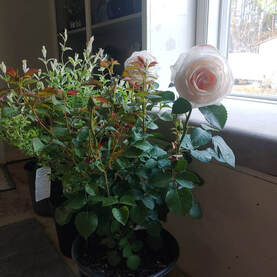
     At our new home, however, I have to start over.  To be sure, it is a beautiful setting with the woods and mountains, but it started out with very few flowers.  So for my birthdays I ask my family for flowers and more flowers to plant.  Yesterday they brought me home a beautifully variegated dapple willow, sunset and white roses, along with a Japanese plum tree.  I couldn’t be happier! 
  

Picture
    Right now they are sitting in my living room, awaiting their new home. That home, though, is my next issue.  It is all clay and highly acidic soil here.  With clay, the plant roots become encased in a sun-baked pot of dirt which doesn’t drain or receive the water well.  When watering, the water streams off and doesn’t sink into the ground.

      The hard soil rejects the life-giving water.

     In order to survive and thrive, I will need to dig out the old clay dirt and start over with fresh, nutrient rich topsoil that can receive the nurture and care necessary for the plants to thrive and rebloom. 

Picture
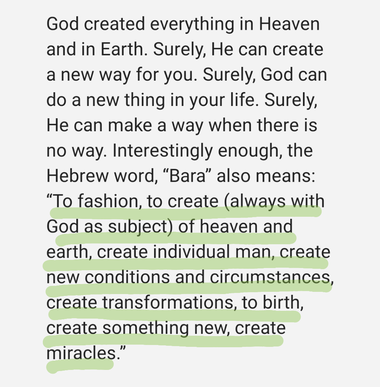
     I was encouraged by my Bible app devotional for today, as it explained that the Hebrew word, “bara,” means to fashion or create (always with God as the subject) of heaven and earth, of man, of new circumstances of conditions, transformations, birth, something new, miracles.​
     Our God was and is and shall always be a creating God.  It is why we, as His image-bearers, find joy and pride in our gifts of creativity, whether that’s art, music, writing, building, gardening, or any number of work or hobbies. But while we always must use something He created to reform something of our design, He always makes something new and entirely good.
     From the beginning of our relationship with Jesus, He recreates us into a new and entirely good creation…completely NEW dirt from which to grow and bear fruit:


“I will give you a NEW heart and put a NEW spirit in you!
I will remove from you your heart of stone
and give you a heart of flesh.”
Ezekiel 36:26
 
“Therefore, if anyone is in Christ,
the new creation has come: The old has gone,
The NEW is here!”
2 Corinthians 5:17
​

     When we come to Jesus, we are broken, defeated and enslaved by our choices and past.  Our lives are a mess.  For too long we have rejected the life-giving Water that Jesus freely gives. Without Him and His transformation, the goodness of God hits our lives and runs off, unable to penetrate and bring healing and refreshment from the harshness of life.
     When we repent and put our faith and trust in Jesus, our lives are reset, rebirthed. We start to drink in that Water of Life, and we see immediate transformation!  The inward change is dramatic, but the outer actions and habits take more time...a lifetime. 
     Even after receiving Jesus as our Savior, we sometimes find ourselves sinking into habits that have been formed in every area of our lives, old habits that don't fit the new lifestyle of freedom and joy and love. In those habits we at times continue to follow ruts back to old lifestyle choices that only brought pain and destruction. 

     But Jesus, He makes all things new. 

     Every part of our lives.  He starts with our very foundational spirit, and makes it alive with all the essential ingredients necessary. He starts with our dirt.  But then?  Then He creates new habits, new ways of thinking.  Here he reforms our actions of service with a new and intimate knowledge of Him as our humble Servant.  Over there He transforms our words of habitual criticism to life-giving words with our knowledge of Him as our Life-creating Word.  In this section of our garden, He renews our hope to rise up again in a new day, because He is “The Sun of Righteousness [who arises] with healing in His wings,” Malachi 4:2.

     It can be difficult not to think on all our mistakes, failures and regrets, and to trust that God is yet even forming new life in our future.  The enemy would like nothing better than to cause us to halt and wallow in our past failures and broken rhythms.  By focusing backward, he knows that we will re-choose the choices that hurt us and others before. The enemy doesn't want us to live in the reality that Christ has set us free from those and given us the power and grace to make new and good choices through His death and resurrection to new life! 

     Praise God, we can look forward to a New Day in Jesus today!

​​

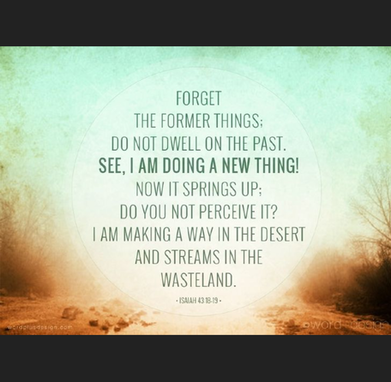
​"Forget the former things; do not dwell on the past.
Behold!
I am doing a NEW thing!
Now it springs up; do you not perceive it?
I am making a Way​ in the wilderness and streams in the wasteland.” Isaiah 43:18-19

Picture

     If what you are facing in your life seems like a wasteland---wasted choices, wasted relationships, wasted finances, wasted health,  wasted time---

     Look to Jesus! 

     Behold our God!

   He is creating a NEW thing today!


​“Behold! I am making all things NEW!”

Rev. 21:5

0 Comments

The Power That Remains

4/6/2021

0 Comments

 
Picture
    Have you ever been fascinated by mountain climbers?  I just think it's incredibly daring and awe-inspiring.  They train intensively for the altitude differences in oxygen levels and physical exertion.  They research and prepare the proper equipment and layers of moisture wicking clothing, and for most of them, they hire a competent and experienced guide. 
    As much as they train or prepare, though, things can go wrong. 
    I remember a few years back when an extended family member had been training rigorously for a climb.  Unfortunately, he broke his leg shortly before the trip was to start, and disappointedly he wasn't able to go with his team.  During the week he had been set to go, Nepal was hit with a severe earthquake and avalanches began on the mountain he was set to climb--Everest. 
    Tragically, all the training, protection and guidance couldn't stop the injuries and even deaths that resulted from an unforeseen and uncontrollable force of nature.  
    In my studies this week, I saw some of the same devastation in the life of King Saul.  In 1 Samuel 16, we find that after his rejection of God, he made a progressive series of poor and destructive choices that avalanched over his kingdom and family.  

After the Spirit of the LORD had departed from Saul, a spirit of distress
{evil, bad, wicked}
 from the LORD began to torment {terrorize, startle} him. Saul’s servants said to him, “Surely a spirit of distress from God is tormenting you.
1 Samuel 16:14-15

​​
​    Without the Spirit of God, Saul was susceptible to the mental torment of an evil spirit.
Earlier in 1 Samuel we see that when Saul was anointed as king, God sent His Holy Spirit to rest upon Saul and empower him with courage, passion and wisdom to get the tasks done that the Lord gave him for his position over the people.
     Once Saul, however, had thoroughly rejected God as his own king (1 Sam 13:13-14; 14:11-26), God in turn rejected Saul, and by consequence, the Spirit of God was removed in order that Saul and all the people of Israel could see just how evil power without godliness could be (1 Sam 8:7-18).
     After the Holy Spirit and presence of God was removed from Saul's life, it was a natural next step for Saul to be harassed by an evil spirit. While we see from the passage that God sent the evil spirit, displaying the sovereignty of God, we also know from Saul's own free choices that he was dwelling on the very temptations that the evil spirit enticed him with...jealously, evil suspicions, envy, murder, deceit, malice, debilitating fear, worry, and discontent. 
     The word used in the Hebrew for the evil spirit “tormenting” him, means to terrorize, bring fear, make one easily startled. He became unable to properly handle the ministrations of the kingdom, being often brooding, enraged, distracted, anxious and rash.
     While God indeed is sovereign in this situation, Saul also made his choice. He chose to serve the evil of his own heart rather than to repent, which in turn led to an open invitation by his spirit to other evil spirits. Spirits of fear, of lust, of pride, and of murder.
    Jesus tells the story in Matthew 12 about a man who had been freed from an evil spirit, and had “swept his house clean, and set it in order.” The healed man's spirit was free and clear and in completely order, free to make its own choices. Tragically, the man's choice was to leave his own spirit empty. In so doing, he became a target for the evil spirit who had previously occupied his body. Going to arid places, Jesus tells us, the evil spirit sought seven other spirits more evil than itself and invited them to come with him to reoccupy the empty man's body, since there was an open vacancy. “The final condition of that man,” Jesus tells us, “was worse than the first.”
     A few years ago we owned a delightful dark chocolate brown newfoundland puppy. He was fluffy and cuddly and playful.  Very quickly, though, we discovered that we enjoyed him better without that "wet dog" smell that is so classic to long-haired dogs. Now, newfoundlands are bred to be water rescue dogs.  Their coats are extra insulating and warm, and they love to play in the rain and snow, making him a perfect dog for our mountain home.  What we learned, though, is that if we shampooed his coat it would temporarily strip the natural oils from his fur and take away the natural waterproofing with which he was created.  Without the oils saturating his fur, the moisture would have access to his skin. 
   Jesus' story illustrated that the only way to not be occupied by evil was to be filled with the Holy Spirit, effectively shutting the door against any unwanted occupation.

                                               Submission to God, His will and His spirit
                                                 results in a saturation that repels evil.


     But there is another condition which the Bible shares with us about torment from evil spirits, one of which believers should also be aware. It is not an occupation, but it is an exterior pressure that brings suffering internally.  An occupation or indwelling of an evil spirit gives it mastery over a person, and enslaves a man to do evil. In contrast, though, suffering experienced by a believer from an evil spirit results in the power and glory of Christ and increased ministry!
     My husband and I are currently leading a youth group at our church. Over the course of the year, I have noticed that whatever Biblical principle I am about to share in our ministry ends up coming very close and raw in my own life, and I far too often find myself confused at the particular and unique trials and feelings that I go through. 
    Confused that is, until I start to work on the next passage for our studies, and find the very answers to my own situation and needs! To be truthful, I am both a little annoyed at this and very grateful. I wish I didn't need to go through even a taste of each problem before I shared it, but it does help me to understand the frustrations and challenges that are involved in working through these principles with the Lord, and I am so very grateful that He does know how to help me handle them!

    This last week, I found myself often coming under a particularly frustrating attack on my nerves. It was debilitating. I am used to having the end of a long day or when my blood sugar is low be very challenging or stressful for me, particularly with noise or mess. But this particular morning was unique in that I was thoroughly rested, well fed, and with no greater than normal noise level. I found that all of a sudden every noise was excruciating, my work on homeschooling or on the computers were met with every kind of roadblock and frustration, and that my soul seemed completely overwhelmed.
    Not only that, but even with my holding in my feelings so that the kids wouldn't be disturbed (I certainly can't say that I have the self-control to never spill my frustrations onto my kids, but this morning I had been extra careful), I started to hear the little kids reacting to this spiritual attack in the middle of what had been a peaceful morning, and they were completely unable to cope. It dawned on me after a bit (I should have noticed it sooner!) that it was spiritual in nature, rather than just a typically difficult day. I prayed silently, submitted our school day and agendas to the Lord, asked for His help and peace and Spirit to comfort us, and commanded any evil spirit to leave in Jesus' name. Within moments God's Spirit had restored my calm and peace completely, and the kids were peaceful again as well, praise the Lord!
    The funny thing is, and rather embarrassing to admit, I forget those moments so very easily! Even today, as I was trying to sit down to write out this devotional, the very same thing happened. This time, it wasn't until I started reading through the passage that it dawned on me that the spiritual attack was happening again, and that I needed to deal with it in the Lord. Once again, as soon as I did, His peace and comfort returned and I was free to work without impairment.
    While that is so simple and wonderful, though, there have been many times where whatever trouble it was that I pleaded with the Lord to remove just remained in my life, and I had to live with the problem while living in His peace in the middle of it, sometimes for years, and some that are still ongoing for me.
   In 2 Corinthians 12:17 the Apostle Paul shares with us his story of great favor, blessing and revelation from the Lord, and his subsequent suffering in order to not give himself over to sin. For Paul, it was very similar—an evil spirit to bring him suffering. However, because Paul's spirit was indwelt with the Holy Spirit, he had an entirely different outcome: “Lest I should be exalted above measure, there was given me a thorn [stake, impalement] of the flesh, a messenger of Satan, to buffet[beat, pound in] me.”
    Paul doesn't share with us in this context to what he was referring, whether it was a physical ailment, emotional trauma, mental agony or spiritual temptation, but whatever it was left him feeling weak and inadequate for what he was called to do. The words he used suggest to me that it was his own form of bearing the cross, the impalement of the cross, from which Jesus Himself prayed also to be spared.
  Therefore, when Paul asked Jesus three time to remove this evil spirit, this acute suffering, Jesus would not, but replied to him:

                    “My grace is sufficient for you, for my power is made perfect in weakness."

    Paul's response is both awe-inspiring and humbling at the same time:

                          “Therefore I will boast all the more gladly about my weaknesses,
                                               so that Christ's power may rest on me.”

     Honestly, this is hard for me. Being weak and inadequate while allowing God to use me is not really what I had hoped for in my dreams of a future in ministry or parenting. Dealing with pain, frustration, uncertain physical outcomes and spiritual attacks on my family definitely wasn't.
   But if my weakness and inadequacy makes Christ's power more evident, if it increases His glory and leads to more healing and wholeness for myself, my family and the people God brings into my life, then I want it.  It does feel backward to me, but a couple of verses come to my mind, "for the message of the cross is foolishness to those who are perishing, but to us who are being saved it is the power of God....But God chose the foolish things of the world to shame the wise; God chose the weak things of the world to shame the strong. God chose the lowly things of this world and the despised things--and the things that are not--to nullify the things that are, so that no one may boast before Him." (1 Cor 1:18, 27-29)
    What about you? What things in your life does the Spirit put his finger on and say, “This....[pain, unfinished story, brokenness, weakness, insufficiency].....this is what I want to use to bring people to Me? This...is how I will bring you the very most blessing.....

       "This...is what makes 
My power rest on you...and remain.”

"Create in me a clean heart, O God, and renew a right spirit within me. 
Cast me not away from Your Presence, and take not your Holy Spirit from me.  
Restore unto me the joy of Your salvation, and renew a right spirit within me."  
Psalm 51:10-12
A Psalm of David
​after he sinned with Bathsheba
0 Comments

Unveiled Faces

8/2/2020

0 Comments

 
"But we all,
​who with unveiled faces contemplate the Lord's glory,
are being transformed into His image with ever-increasing glory,
​ which comes from the Lord, who is the Spirit."
2 Corinthians 3:18

     Last night as we lay in bed and watched the moon rise through the trees, my daughter, who is six, asked if it was the sun. I explained the moon's reflection of the sun, which had just shortly set. We talked about how the moon doesn't actually generate any of its own light, but can shine so brightly so as to light up the darkness of the night with the very reflection of a sun that can't even be seen.

     As I thought about that, I thought again how much we as Christians are just that. We don't create any of our own light. We can only reflect our Savior Jesus and His truth, love, beauty and mercy to the world around us. And how desperately the darkness of our world, with hate, violence, evil and lies needs to see that!

     But in order to reflect Him accurately, we need repentance. Daily repentance. It's a word that makes people angry sometimes. But the Greek word, "metanoia" just means "repentance, a change of mind, change in the inner man." To, after thinking about what we know of God, change our mind to agree with what He says harms His most valuable creation--us. What should anger us about that?

     I know that I often find that I am convicted when I speak harshly to my kids, and realize that I've just hurt them in my selfishness or pride. So I repent. I say, "you're right, Father, that was wrong. Please help me not to do that again," and I ask their forgiveness too.

    And then I practice doing what is right. Because I love God, and because I love you all. I don't want to cause harm. I want to build and not tear people down.

​"Little children, let no one deceive you.
Whoever practices righteousness is righteous, as he is righteous."
​1 John 3:7


     But in my practicing I mess up. My salvation and righteousness is really based on Jesus' blood when He took my punishment for me, but because I love Him and love the ones He loves, I practice being like Him.

       That's the beauty of the gospel!

     The more we practice, the more we reflect Him accurately. The more we spend time with Him and in reading the Bible, the more we get to know what He is really like!

     Just like my kids practice being like Jeff and I and have a ways to go to maturity, so do I. But I love my heavenly Father! So it is a joy to become like Him.

"I will be satisfied when I awake in your likeness"
Ps. 17:15
Picture
0 Comments
    Picture

    Author

    Halley Faville lives with her husband and children in their mountain home in Oregon. 

    ​As a homeschooling mother of 7 children, she enjoys spending her free time in  language arts, music, art, and outdoor activities.  

    Archives

    August 2025
    August 2024
    May 2024
    April 2024
    February 2024
    October 2023
    June 2023
    December 2022
    October 2022
    June 2022
    April 2022
    March 2022
    December 2021
    November 2021
    October 2021
    September 2021
    August 2021
    July 2021
    June 2021
    May 2021
    April 2021
    March 2021
    January 2021
    December 2020
    November 2020
    October 2020
    August 2020

    Categories

    All
    1 Samuel
    2 Chronicles
    40 Days Of Goliath
    Abraham
    Acts
    Children
    Christmas
    Cross
    David
    Deliverance
    Ecclesiastes
    Eph 5:22-23
    Exodus
    Faith
    Faithfulness
    Fall
    Favor
    Feasts
    Focus
    Fruit Of The Spirit
    Generosity
    Genesis
    Gentleness
    Gideon
    Goodness
    Gospel
    Hannah
    Harvest
    Healing
    Homeschool
    Isaac
    Jehoshaphat
    John
    Joy
    Judges
    Justice
    Kindness
    Kingdom
    Listen
    Live
    Love
    Luke
    Ministry
    Multiplication
    Nativity
    Parenting
    Passover
    Patience
    Peace
    Perseverence
    Power
    Praise
    Prayer
    Promise
    Redeemer
    Relationship
    Repentance
    Resolution
    Reward
    Salvation
    Sanctification
    School
    Strength
    Submission
    Suffering
    Transformation
    Trust
    Truth
    Victory

    RSS Feed

Photos from bangorvineyardshedmedia, JamesInDigital, wildrosetn39
  • Home
  • Halley Faville
  • Jeff Faville
  • Oaks Canyon Youth
    • Youth Sign-Up/Forms
    • How You Can Help!
  • Beth Bearden
  • About
  • Contact
  • Resources
  • Recommended Blogs