Oaks of Glory
  • Home
  • Halley Faville
  • Jeff Faville
  • Oaks Canyon Youth
    • Youth Sign-Up/Forms
    • How You Can Help!
  • Beth Bearden
  • About
  • Contact
  • Resources
  • Recommended Blogs

Behold, the Lamb of God!

4/28/2024

1 Comment

 
Picture

Every year Pesach is celebrated, and every year the Jewish nation awaits their Messiah. When we visited Israel two years ago, I was able to speak with a Jew at the Pool of Siloam.  He questioned me about Jesus, and told me that the Jewish people are fearfully awaiting the coming of the Messiah, because they are told that he was coming soon, ready or not.  To get ready, they are told, they must do enough good works.  Sometime between now and the end of the 6000 years of the world, he will come.  If they are ready, it will be to set up his kingdom.  If they are not, it will be to judge them.  He asked me about our Messiah.  We talked about how Jesus, a Jew, is the passover lamb, crucified for our sins to bring us back into a relationship with God.  We talked about how He is coming again, and all those who place their faith and trust in Him have no fear of His coming, but only joy and anticipation!

It was deeply sad to me that, for many of the Jews, a "veil lies over their hearts," so that they cannot see that their Messiah has come.

Yet hidden in their own Seder meal is the very heart of the gospel.  Moses prophesied that a “Prophet like” him would come, One whom God’s people must listen to.  The Messiah, a prophet deliverer like Moses has come, was rejected, suffered and died for our sins to reconcile us to the Father and rose again to give us new life! This good news is first for the Jews, then to the Gentiles.  Not only that, but the Exodus story is prophesied to repeat itself, when our Messiah returns for His people.  On that day, The Suffering Messiah will come as the Triumphant King!  God’s people will be delivered and the Enemy we see before us today, we will see no more forever! (Ex. 13:14)

As we meditate on this holy and deeply meaningful feast, I invite you to join us as we discover the meaning behind each element and the incredible hope we have as we await our Messiah, Jesus, who will return again for us!
​

The week of Pesach, of Passover, begins on Nisan 14th with a Seder meal and concludes with the bringing of the Firstfruits and rituals in readiness for the Harvest.
​

Yeast Removal 

Each household was commanded to examine and remove all leaven from their homes. Ridding all forms of yeast, or leaven, from the whole household was meticulously done for days.  All breads with any leaven were abstained from for the entirety of the seven day festival.  This represented the close examination of our hearts by the Holy Spirit to remove any sin against God or others.  We are to repent of any wrong and remove anything within our homes or families and even throughout our whole church family that causes us to turn away from obedience to God (Exodus 12:8, 15, 13:7, 1 Cor. 5: 11:27-29).
​

Fast of the Firstborn

Some Jews have the practice that the firstborn in every family fasts on the eve of Passover from sunrise to sunset. This comes from the firstborn son being consecrated to God alone as the Firstfruits of the womb. Instead of sacrifice their firstborn, they would instead redeem him with a sacrifice (Ex. 13:13-16).  In addition, it is in memory of their redemption out of Egypt, the house of slavery to dead, unending work. Both Pharaoh and Herod killed all the male Hebrews babies two years old and under, in their attempt to prevent the Messiah/Deliverer from coming (Ex. 1:22; Josephus, Antiquities of the Jews, Chapter 9.2; Matt. 2:16).  This Deliverer had been prophesied in each instance by wise men who instructed the ruler about the coming Deliverer. In an outstanding reversal, it is God who brings Pharaoh’s second attempt at killing the firstborn back upon him, when the Angel of Death comes to take the Egyptians firstborn, and passes over the firstborn of all under the blood of the sacrificial lamb.
​

Cessation from Work

​During the first two and last two days of Passover observant Jews will abstain from all work, resting in the finished work of God.  This symbolizes the finished work of Christ in his life, death and resurrection and how believers are to enter into His work and refrain from any form of trying to earn their own salvation through good works or observance of the Law (Genesis 2:2; John 17:4, 19:28-30; 1 Cor. 5:1-9; Hebrews 4:9-10).
​

Seder Meal (Last Supper/Communion)

1. Kadesh — Kiddush (“Holy,” or “sanctified”)
​
The wine is blessed at the start of the meal. This cup of sanctified wine represents the blood of Christ, poured out in death for us.  His side was pierced on the cross, blood and water pouring out as He prophesied at the Seder meal (Last Supper)(Luke 22:20-21, John 19:34). There are four cups of wine:
  1. The Cup of Sanctification
  2. The Cup of Deliverance/Judgement (deliverance for those who repent, judgment for those who refuse
  3. The Cup of Redemption
  4. The Cup of Acceptance

2. Urhatz —Wash
Washing is first performed in preparation for eating.  A towel is wrapped on the arm of the one serving.  This person goes around to each of the participants, pouring water over the hands from a pitcher into a bowl. In Jesus' time, this would have included foot washing because of the many miles of walking through dust with sandaled feet. Jesus represented this washing when He wrapped a towel on himself and washed the feet of His disciples, declaring them fully “clean.” This further signifies how Jesus washes His bride, the Church, with the water of the Word, cleansing her and preparing her for the Wedding Supper of the Lamb when He returns for His Church. (John 13:1-17, Eph. 5:26)
 
3. Karpas — “wool”
Any vegetable that is not bitter may be eaten. Common vegetables used are celery, parsley, onion, or potato. Dipped in salt water for purification and seasoning, they remind us of the baby boys cast in the Nile and the tears shed by the slaves.
In its meaning of “wool,” it is used in the Hebrew scriptures to demonstrate Christ types, who as a “lamb before His (wool)shearers was silent, so He did not open His mouth” at His trial and crucifixion (Isaiah 53:7:
It is used to describe Esther’s royal robe when she went before the King after three days, risking her life to intercede for her people and gaining their freedom on the day of Passover.
It describes Joseph’s “coat of many colors,” made of wool, torn and dipped in the blood of the goat as his brothers when they sold him into slavery.
It describes Tamar’s torn “coat of many colors” as she was defiled by her brother, her blood being shed.
Finally, they remind us of Jesus’ command to rejoice at our own persecution as believers, stating that we are the salt of the earth in order to bring the purification of Christ to others.  Though we are favored by our Father, just as Esther, Joseph, Tamar and Jesus, and wear the royal robes of righteousness, through suffering, we allow others to “taste and see that the Lord is good!” (Matt 5:10-16, Psalm 34:8)
 
4. Yahatz — “Divide”
Three matzahs (unleavened breads) are used in the ceremony, represented the triune nature of God.  The middle matzah is broken and the larger part saved for the conclusion of the meal, signifying Jesus’ body, broken for His people (Luke 22:19). The saved portion signifies the return of the Messiah at the end of time. The matzah is unleavened, representing the innocent and sinlessness of Christ.  It is pierced through many times, representing the piercing with the spear by the soldier at Christ’s death as well as the flogging He received in order to save us from our sins: 5But he was pierced for our transgressions; he was crushed for our iniquities; upon him was the chastisement that brought us peace, and with his wounds we are healed. (Isaiah 53:5

5. Magid — Narration of the Exodus story of redemption from slavery

The plate of affliction. The plate with the symbols of affliction is lifted up.
The shankbone of the Paschal lamb or kid:  the zero’a of the paschal sacrifice is included because the word zero’a literally means “arm,” alluding to the verse which states, “I will redeem you with an outstretched arm . . .”;

Boiled egg: In Aramaic (spoken by Jews at the time of Jesus), an egg is called bey’a, which also means “pray” or “please.” Thus, the foods silently plead, “May it please the Merciful God to redeem us with an outstretched arm.”

Bitter herbs: These signify the bitterness of the death.  The word bitter in Hebrew is “marah,” and was included in the names of the women, three different Marys, who attended Jesus’ cross, burial and witnessed to His resurrection. 

Invitation to the nations. An invitation to the stranger and foreigners is to join the Seder meal, signifying the invitation to the world, including Gentiles, to become part of the Body or Church of Jesus.

The wine cups are refilled.
The youngest person at the seder asks the Four Questions and responses are given.

The Four Children
These signify four kinds of people who respond to the gospel: wise, wicked, simple, and one who does not know how to ask.  Jesus’ parable of the farmer who sows his seed represents the gospel being shared with people.  There are four kinds of people who receive His Word: 1) Those who hear, but Satan comes and takes it away so they will not believe to salvation; 2) those who receive it with joy, but because they do not press onto maturity through a deeper understanding and relationship with God, only persevere in the faith for a time until they give into temptation; 3) those that are consumed by the cares, riches and pleasures of this world and bring no fruit of the Spirit because they never reach in maturity in God; and 4) those who are honest and good in heart, who having heard the Word, hold tightly to it and bring much fruit with persevering patience (Luke 8:5-15).

The Ten Plagues. The word “plague” is also the word “stricken.”  Just as Jesus was stricken, so also the evil of the world will be stricken at the end of time as the Lamb of God avenges and delivers His holy people who have suffered at the hands of those who refuse to repent (Rev. 15).

Cup of Suffering. Since our “cup of salvation” cannot be regarded as full when we recall the suffering of the Egyptians, a drop of wine is removed from the cup with the mention of each plague. This signifies the remainder of the suffering which we as believers will endure as we also drink the Cup of Suffering given us by our Father (Mark 10:38-40, John 18:11, Col. 1:24)

Dayenu (It Would Have Been Enough). Let all present join in the refrain thanking God for all the miracles he bestowed upon the Israelites.

The cup is again lifted in joy, thankful for God’s deliverance, ready to praise Him with the first word of the Psalm of praise (Hallel). Two Psalms of the Hallel, Psalms 113-118
Drink the wine, with the blessing of salvation.

6. Rohtza — WashReady to eat, the hands are washed before the meal, as is required at any meal. It is similar to the previous hand-washing, but now all wash with the usual benediction as the hands are dried.

7. Motzi Matzah — Eating MatzahThe first food at the meal is the matzah, the unleavened bread. It is blessed before being eaten.

8. Maror — Bitter HerbsSmall pieces of horseradish are dipped into haroset (a sweet paste symbolic of mortar) to indicate that overemphasis on material things results in bitterness.

9. Korekh —The Passover lamb or kid (young goat) was sacrificed in memory of the blood of the lamb or goat that was put on the doorframe of the houses of Egypt in order for the angel of death, which was bringing judgment, to pass over them and spare their families.  In ancient times, the Talmudic scholar Hillel ate the three symbolic foods (lamb, matzah, and bitter herbs) together so that each mouthful contained all three. Thus, the symbols of slavery and liberation were intermingled.

10. Shulhan Orekh — MealThe joyous feasting gives us the feeling of human fellowship in harmony with God.

11. Tzafun — DessertNow the afikomen. Either someone has “stolen” it, or parents can hide the afikoman when it is first put aside (Step 4) and let the children look for it during the meal to win a prize. The larger piece of matzah, the unleavened bread which was broken and hidden is now found and shared among those present.  This represents how the body of Jesus was hidden from the sight of His disciples as he ascended into the clouds, with the promise that He will return one day in the same way He ascended and that every eye will see Him on that day! Those who pierced Him will mourn for Him as for an only, beloved son (Acts 1:9-11, Rev. 1:7).  Just as the matzah is hidden, it is found by the children and they are rewarded, so also Jesus is coming soon, and says to us, “My reward is with Me!” (Rev. 22:12)

12. Barekh — “Let us praise!”This is the usual “bentschen,” grace after meals, including, of course, thankfulness for the Passover holiday. Fill the cup before this grace and drink the third cup at its conclusion, with the usual “bore p’ri hagafen” blessing.

Door for Elijah. At this point in the seder, they open the door for Elijah, who by tradition is the forerunner of the Messiah, the harbinger of hope, and sing “Eliyahu Ha-navi.” At Jesus’ transfiguration, there was both Moses and Elijah who came and talked with Him. Moses represents the 5 books of the Law that witness against our sin, while Elijah represents the Prophets who prophesied of the Messiah’s coming.  Afterward, the disciples asked Him about this, and Jesus declared that Elijah would come, but also had come in the form of John the Baptist, the forerunner of the Messiah.  Malachi 4 prophesies of the Judgment Day of the Lord, the second coming of the Messiah, wherein Moses’ Law would testify to our guilt and the prophets would testify to whether we have received the Messiah.  Elijah would come again, and if the hearts were not restored, would “strike” the land with a decree to bring them all under the curse of those devoted to destruction.
This is prophesied for completion at the end of time, when the two witnesses will stand and strike the earth with plagues before being martyred and resurrected (2 Kings 2:11, Jude 1:9, Matt 17:1-12, Malachi 4:1-6, Rev. 11:3-13, Zechariah 4:11, John 6:30-46, Luke 16).

13. Hallel — Psalms of PraiseThe rest of the evening is given over to hymns and songs. The Hallel is sung, including Psalm 118, a messianic prophecy of the rejection of Messiah by the leaders of Israel, the Messiah’s death and resurrection and how He becomes the gateway to God for His people (Matt 26:30, Psalm 118).

14. Nirtzah — “Accepted”Nirtzah means to be accepted.  Because of the Lamb’s sacrifice, we are included in the righteousness of Jesus when He offered the payment for our redemption price in the form of His life.  God accepted us in His Beloved and we are also to accept one another in Jesus in the same way.  At this conclusion, they sing L’Shana HaBa’ah B’Y’rushalayim [Next Year in Jerusalem] (Eph. 1:6, Rom. 15:7).


Bringing the Firstfruits (Bikkurim)

By law, the Israelites were commanded to bring the first of their crops and the firstborn of their children or animals to the temple (Ex. 23:19; 34:26, Num. 15:17–21; 18:12–13; Deut. 26:1–11).  If it was a crop, it was given to the Levites.  If it was an animal or a child, it was redeemed.  All firstfruits, however, belonged to God. Jesus became the firstfruits, the firstborn from among the dead  in order to redeem all other firstborns (Col 1:18).  Just as the firstborns were redeemed before the Exodus from death by the blood of the sacrificial lamb, so when Christ became our Lamb He redeemed us and became the firstborn among many brothers and sisters (Rom. 8:29).

The Resurrection of Christ would begin the first day of the counting of the Omer--on Nisan 16.  This harvest counting would give time for the harvest to be fully brought in and completed. 

As we continue our studies into the Book of Acts and the work of the Holy Spirit in beginning the Harvest of all souls, let's prayerfully consider how we can follow Jesus, our forerunner.  

Isaiah 53  
​

Who has believed what he has heard from us? And to whom has the arm of the LORD been revealed?
2For he grew up before him like a young plant, and like a root out of dry ground;
he had no form or majesty that we should look at him, and no beauty that we should desire him.
3He was despised and rejected by men, a man of sorrows and acquainted with grief;
and as one from whom men hide their faces he was despised, and we esteemed him not.
4Surely he has borne our griefs and carried our sorrows; yet we esteemed him stricken, smitten by God, and afflicted.
5But he was pierced for our transgressions; he was crushed for our iniquities;
upon him was the chastisement that brought us peace, and with his wounds we are healed.
6All we like sheep have gone astray; we have turned—every one—to his own way; and the LORD has laid on him the iniquity of us all.
7He was oppressed, and he was afflicted, yet he opened not his mouth;
like a lamb that is led to the slaughter, and like a sheep that before its shearers is silent,
so he opened not his mouth.
8By oppression and judgment he was taken away;
and as for his generation, who considered that he was cut off out of the land of the living, stricken for the transgression of my people?
9And they made his grave with the wicked and with a rich man in his death,
although he had done no violence, and there was no deceit in his mouth.
10Yet it was the will of the LORD to crush him; he has put him to grief;
when his soul makesh an offering for guilt, he shall see his offspring; he shall prolong his days; the will of the LORD shall prosper in his hand.
11Out of the anguish of his soul he shall seei and be satisfied; by his knowledge shall the righteous one, my servant, make many to be accounted righteous,
and he shall bear their iniquities.
12Therefore I will divide him a portion with the many, and he shall divide the spoil with the strong, because he poured out his soul to death and was numbered with the transgressors; yet he bore the sin of many,
and makes intercession for the transgressors.

1 Comment

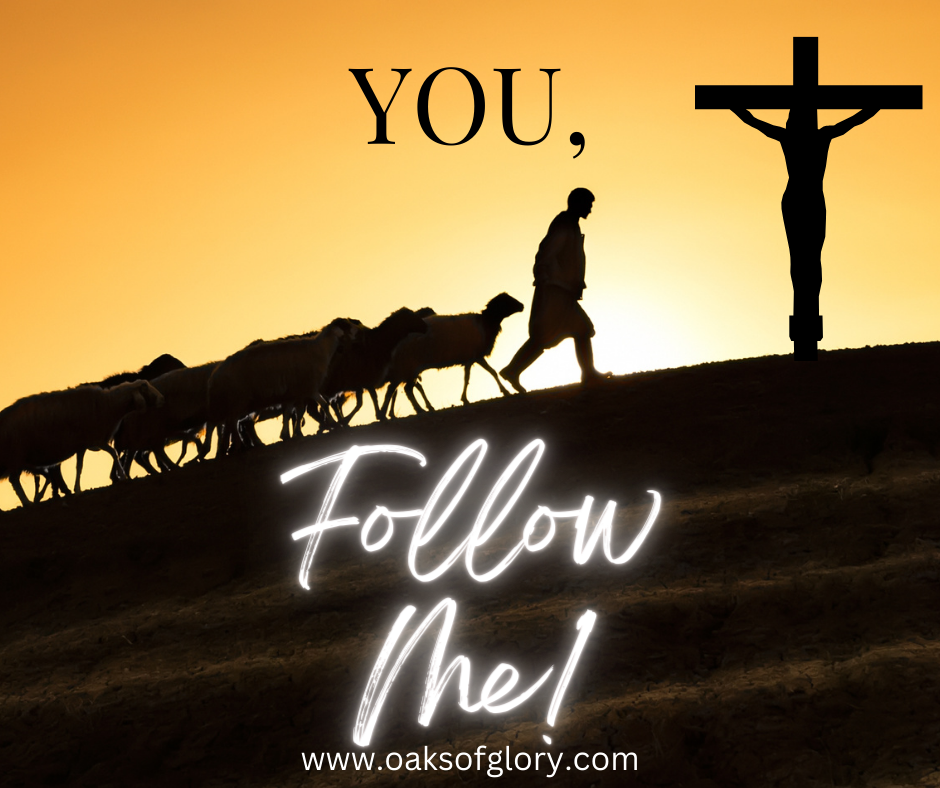
You, Follow Me!

4/20/2024

0 Comments

 
Picture
We have a lot of kids.  If you might believe it, sometimes it's hard for me to concentrate, get work done, or rest well in our home. :) But I still need to be present and available.  So Jeff built me a little cottage as a retreat. I love going out there and looking at the trees, listening to the wind and the water in the creek.  God restores my soul there. 

For a while my daughters lived in the cottage while our parents were living with us.  After they were able to move into other rooms again, the cottage was left cold, empty and uninviting.  Of the many things needed out there, the top concern I had was heat!  I searched the internet for the perfect heater.  I love to read and have a lot of books, so I wanted it to have bookshelves attached.  After some time, I found a little, white electric fireplace with bookshelves on either side.  It was delightful!  I could go out there with a cup of tea and enjoy watching the fake flames dance around.  It was great-- until two weeks later the fireplace stopped working. 

Oh, the flames still danced, it still looked like it worked, but there was no power to the heat element.  All it could do was look pretty.  It couldn't function in any purposeful way to chase away the cold in that little room.  It needed to be connected to a genuine source of real power.  


So when they had eaten breakfast, Jesus said to Simon Peter, “Simon, son of Jonah, do you love Me more than these?” John 21:15
​

We must hear and 0bey by agape-loving God.


In John 21, John introduces us to Jesus’ commissioning of His disciples on His third appearance to them after His resurrection. The disciples had just gone out fishing, mirroring their original calling by Jesus. Now, after breakfast, Jesus has three questions for Peter, and three questions for us.  "Do you love Me?"

John, the author of this gospel, refers to Peter as Simon Peter. His original name was Simon.  It is the same name as Simeon, and comes from the Hebrew verb, “shama:” to hear and obey.
​
The Shama was the commandment of God which the Israelites would recite first in the morning and last at night every day of their existence, which Jesus claimed to be the Greatest Commandment:
​

“Hear, O Israel: The Lord our God, the Lord is one! You shall love the Lord your God with all your heart, with all your soul, and with all your strength. Deut. 6:4-5


This was Simon’s name.  He carried this around with him daily.  He was to hear and obey God out of gratitude for God hearing his cries for salvation.   

But John reminds us that Simon has another name, “Peter.”  Why? 

​To understand Simon Peter’s second name, we need to go back to the beginning of the book, to John 1:40-42.  Andrew had just been at John the Baptist’s Jordan River baptism, where John the Baptist identified Jesus as the Messiah when the Holy Spirit came upon Jesus as a dove and remained.  He announced Jesus as the Lamb of God who would “take away the sin of the world!” It was then that Andrew went and got Simon and told him that he had found the Messiah and brought him to Jesus.
​

Now when Jesus looked at him, He said, “You are Simon the son of Jonah. You shall be called Cephas (Peter)” (which is translated, A Rock). John 1:40-42

 
But here in this passage Jesus specifically refers only to his original name.  Why?  We will get to that in a bit, but for now we also need to see that Jesus keeps referring to Simon as the son of Jonah. 

Jonah means “Dove.” 

But there is also another story of Jonah.  It is the story of a prophet that God commands to go to his enemies to tell them of God’s pending judgment who wanted God’s grace for himself, but not for his enemies. The story ends with us as the readers not being told whether Jonah ever allows God to change his heart.

Simon is a son of Jonah.  He is frail, weak and full of false bravado.  He hears God, he receives God’s grace for his three times’ denial of Jesus and every other wicked thing he had done—but he still doesn’t want to give God’s grace to the evil Gentiles, like the Romans, who had taken over his country and abused them.

Next Week we will start a series in the Book of Acts, and we will find that twice God uses this story with Jesus in John 21, in the story of the Acts of the Spirit in the birth of the Church.  Simon will truly be Simon son of Jonah, with a redemptive ending!

So Jesus asks the question, “Simon, son of Jonah, do you love Me more than these?”

More specifically, Jesus asks “do you have agape-love for me?”  This is God’s sacrificial love for us.  God so agape-loved the world that while we were still sinners, living in hostile rebellion to God, He gave His only, beloved Son to die to redeem us. That is the agape-love of God.  “Simon, son of Jonah, do you agape-love me more than these?


We must agape-love God more than anything in the world.

“More than these.” To whom or what is Jesus referring?

To find out, we need to go back to Jesus’ original calling of Simon Peter in Luke 5:1-11. Jesus had just spoken to the multitude from inside Simon’s boat.  Afterward, He tells Simon to put the boat out into the water to catch, and Simon, after protesting that he had tried all night and caught nothing, hears and obeys Jesus.  They catch such a great amount of fish that their nets begin to break.  In Simon’s awe of this miracle, he falls down at Jesus’ knees in repentance and fear, proclaiming, “go away from me, Lord, I am a sinful man!”
​

 And Jesus said to Simon, “Do not be afraid. From now on you will catch men.” So when they had brought their boats to land, they forsook all and followed Him. Luke 5:10-11


​Back in John 21, we must remember, Jesus had just risen from the dead.  Where does Peter go? Fishing. Jesus’ renewed calling of Simon Peter in John 21 recalls his realization of his sinfulness and the grace given to him.  Jesus had originally told him not to be afraid.  Simon, however, had been very afraid at the cross, to the point where he denied Jesus three times.  So after Jesus’ death Peter goes back to fishing, because it’s what he knows, what he loves, what is safe, and what provides him the life that he wants: one of success and safety. 

There is a grammatical structure in the Greek that point to what Jesus is talking about with his phrase “more than these” in both accounts. In the Greek, these words “all” and “more than these” grammatically end the same as the object to which they are referring. In Peter’s original calling, when they “forsook all,” the grammar indicates that the “all” is referring back to the boats. In John 21, “more than these” is also referring to the fishing, to the fish and to his livelihood from this career.  The antecedent, the words earlier referenced are the “so many great fish, 153 of them.”  Jesus is asking him, “Do you agape-love me more than you love fishing?  More than you love this boat, this net, this job, this income, this world?” 
​
Jesus clarifies this further in Luke 14:25:

​

Now great multitudes went with Him. And He turned and said to them, “If anyone comes to Me and does not hate his father and mother, wife and children, brothers and sisters, yes, and his own life also, he cannot be My disciple. And whoever does not bear his cross and come after Me cannot be My disciple. For which of you, intending to build a tower, does not sit down first and count the cost, whether he has enough to finish it— lest, after he has laid the foundation, and is not able to finish, all who see it begin to mock him, saying, ‘This man began to build and was not able to finish’? Or what king, going to make war against another king, does not sit down first and consider whether he is able with ten thousand to meet him who comes against him with twenty thousand? Or else, while the other is still a great way off, he sends a delegation and asks conditions of peace. So likewise, whoever of you does not forsake all that he has cannot be My disciple. Luke 14:12-14, 25-33
​

Back in John 21, Simon’s response to Jesus’ question, Do you agape-love me more than these” is sad and unsatisfactory. He has no power over fear. Simon said to Him, “Yes, Lord; You know that I have phileo-affection for You.”

Peter has a self-awareness. He doesn’t use agape-love, he uses “affection.”  He loved Jesus like he might his brother or his family.  To agape-love God means to love Him more than anything else.  It is a comparison word, and by comparison our love for Him should be so much more than anything else in this world that people might consider the natural love we have for people who are close to us to be in comparison a hatred.  That is the difference between the agape-love of God and the phileo-affection that Simon has for Jesus. 
​

If we love Jesus, we must Shepherd His Church. 

Picture
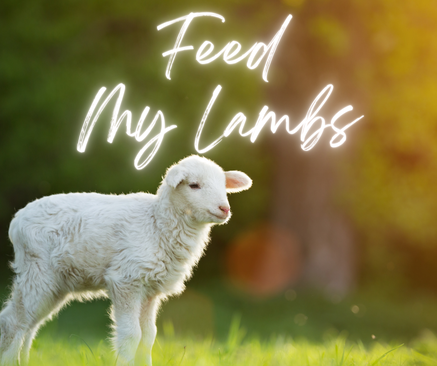
"Jesus said to Simon, 'Feed My Lambs."
 
Jesus had just called His disciples “children” at the beginning of their encounter with Him.  To feed a sheep means to give it nourishment.  To feed a lamb is to give it milk, because it is not yet ready for solid food.  Milk is the Word of God, but it is the easy word of God.  The gospel, the commands, the elemental principles of God’s word.  “As newborn babes,” 2 Peter 2:2 tells us, we are to “desire the pure milk of the word, that you may grow thereby.” 

This command to Simon is part of The Shama:


“Hear, O Israel: The Lord our God, the Lord is one! You shall love the Lord your God with all your heart, with all your soul, and with all your strength.
“And these words which I command you today shall be in your heart. You shall teach them diligently to your children and shall talk of them when you sit in your house, when you walk by the way, when you lie down, and when you rise up.
Deut. 6:4-7

If we agape-love Jesus, we will feed those new to Jesus, the little children who are new to the faith, the milk of the Word of God as they grow.  We will spend our waking hours looking for opportunities to share with them who God is, what His nature is, and how we can follow Him better. 
​
Milk is for the immature, for the worldly, those not taking the steps of walking in the Spirit. 

Paul talks to the Corinthian Church in 1 Cor. 3:1-3 about their pettinesses and sinful, worldly lifestyles as Christians and challenges them:

​

Brothers and sisters, I could not address you as people who live by the Spirit but as people who are still worldly—mere infants in Christ. I gave you milk, not solid food, for you were not yet ready for it. Indeed, you are still not ready. You are still worldly. For since there is jealousy and quarreling among you, are you not worldly? 1 cor. 3:1-3
​

Simon was still a “child” because he was still focusing on the world and what he could get out of it.  Jesus was calling him to maturity, to forsaking the world and preparing to live out his calling in a way that would no longer just focus on his own need for grace, but also for the world’s need for salvation. 
​

Jesus said to him again a second time, “Simon, son of Jonah, do you agape-love Me?”

He said to Him, “Yes, Lord; You know that I have affection for You.”
​

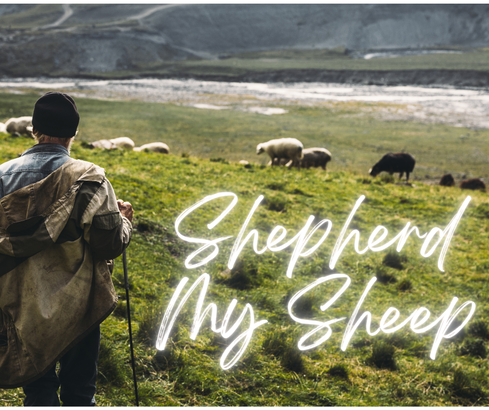
He said to him, “Shepherd My sheep.”

​

Picture
Sheep are mature adults, mature Christians. To shepherd means to not only provide pasture and calm waters, but also protection from thieves and predators. They are ready to grow on more than just milk. As we shepherd our families and those God has placed into our lives, they will need to be led to where they can learn more about God.  They need protection and wisdom from the enemy's lies and deception.  They need to be led to still, quiet places where they can have their soul restored in the Lord's presence. They need to be taught how to be discerning between God's voice and the enemy's voice: 
​

We have much to say about this, but it is hard to make it clear to you because you no longer try to understand. In fact, though by this time you ought to be teachers, you need someone to teach you the elementary truths of God’s word all over again. You need milk, not solid food! Anyone who lives on milk, being still an infant, is not acquainted with the teaching about righteousness. But solid food is for the mature, who by constant use have trained themselves to distinguish good from evil. Heb. 5:11-14
​

Peter was still worldly.  He was still focused on what he could gain out of this for himself.  He was “supposing that Godliness was gain” (1 Tim. 6:5).

When we are raising our children, the goal isn’t just that they feed themselves, clothe themselves and clean up after themselves.  When they are newborns, we do everything for them.  As they grow and starting to eat solid food, we still do much of the work for them.  But the goal is so much more.  We are raising our children to not only provide for themselves, but to be able to provide for a family and their community.  To be a blessing to the world.  That is maturity.

Jesus is telling Simon will need agape-love to shepherd His church.  It is a sacrificial love that lays down one’s life, one’s dreams, one’s success and reputation.  In fighting off predators and protecting the sheep, there is necessary risk that we must accept. As a parent, we understand this.  We know that caring for our kids means that we may need to place ourselves into harm to make sure that our kids are protected.  We know that there will be sleepless nights, long hours, and challenging times trying to provide for them. 

​This is something that is very challenging for us to accept.  It was challenging for Simon, because he loved and cherished his life.  In Matthew 16 The Jewish rulers come to Jesus asking him to prove himself as the Messiah.  Jesus tells them the only sign they will be given is the Sign of Jonah.  Just as Jonah was in the belly of the sea serpent for three days and three nights, so Jesus would be in the grave for three days and three nights before his resurrection.  Jesus was suffer the cross before the life.  The Jewish rulers were looking for a conquering messiah, one who would conquer, decimate and humiliate their enemies, raise them all to power, fame and wealth, and make everything amazing.  This is what Simon also wanted from a Messiah.  As we go on in Matthew 16, Jesus then warns his disciples to be wary of the problem the Pharisees have.  Then in verse 15 he asks them this very important question:  Who do you say that I am? It is Simon's answer that defines his identity:
​

Simon Peter answered and said, “You are the Christ, the Son of the living God.”
Jesus answered and said to him, “Blessed are you, Simon Son of Jonah, for flesh and blood has not revealed this to you, but My Father who is in heaven. And I also say to you that you are Peter (a small pebble or easily moved stone), and on this Rock (a large, cliff-side rock used as a foundation to build structures) I will build My church, and the gates of Hell shall not prevail against it. And I will give you the keys of the kingdom of heaven, and whatever you bind on earth will be bound in heaven, and whatever you loose on earth will be loosed in heaven.”
From that time Jesus began to show to His disciples that He must go to Jerusalem, and suffer many things from the elders and chief priests and scribes, and be killed, and be raised the third day.
Then Peter took Him aside and began to rebuke Him, saying  “Far be it from You, Lord; this shall not happen to You!”
But He turned and said to Peter, “Get behind Me, Satan! You are a stumbling-block to Me, for you are not mindful of the things of God, but the things of men.”
Then Jesus said to His disciples, “If anyone desires to come after Me, let him deny himself, and take up his cross, and follow Me. For whoever desires to save his life will lose it, but whoever loses his life for My sake will find it. For what profit is it to a man if he gains the whole world, and loses his own soul? Or what will a man give in exchange for his soul? For the Son of Man will come in the glory of His Father with His angels, and then He will reward each according to his works. Assuredly, I say to you, there are some standing here who shall not taste death till they see the Son of Man coming in His kingdom.”
 Matthew 16:16-28
​

It was by the Spirit of God that Peter recognized the power of God in the Son of God!  It was by the frailty of his humanity that he resisted the calling to suffering of His same Messiah.  Again, in John 10:11-13, Jesus reminds us of the difference between sharing the gospel for worldly gain vs one taking care of the Church out of agape-love:
​

“I am the good shepherd. The good shepherd lays down his life for the sheep. The hired hand is not the shepherd and does not own the sheep. So when he sees the wolf coming, he abandons the sheep and runs away. Then the wolf attacks the flock and scatters it. The man runs away because he is a hired hand and cares nothing for the sheep. John 10:11-13
​

But Jesus knows that Simon doesn’t have this kind of courage in him.  He knows he’s just a Peter, just a movable, little rock.  So when Jesus is telling Simon Peter to Shepherd His Sheep, he is reminding him of his need to understand his frailty as Peter, not just Simon. Simon would need to depend entirely on the Spirit of God to accomplish the work of shepherding God's people. It would only be on the Rock of Christ that the Church would indeed be built and that not even Hell’s Gates could stand up against the onslaught of the Church of Christ to redeem the world that God loves!

​Simon Peter should not be afraid.  But he is.  He is afraid of the cross.  He is afraid of death.  And this is preventing him from being who he is called to be:  one that shepherds Christ’s church.
​

​
He said to him the third time, “Simon, son of Jonah, do you have affection for  Me?” Peter was grieved because He said to him the third time, “Do you have phileo-affection for Me?”
And he said to Him, “Lord, You know all things; You know that I have phileo-affection for You.”
Jesus said to him, “Feed My sheep.
​

Jesus knows all things.  Yes, he knows that Simon Peter only has an affection at this point.  He needed Simon to know it.  He needed Simon to know the kind of love that was necessary.  He knows us too.  He knows our fears.  He knows our conflicting allegiances.  He knows that we struggle to give up what we cannot keep to gain what we cannot lose. 

He knows it’s hard. 

But if we have even affection for Jesus, we must follow Him by taking up our cross and caring for His people.


Most assuredly, I say to you, when you were younger, you girded yourself and walked where you wished; but when you are old, you will stretch out your hands, and another will gird you and carry you where you do not wish.” This He spoke, signifying by what death he would glorify God. And when He had spoken this, He said to him, “Follow Me.”
​

The very cross Simon ran from would become the death he died.  The fear he faced would be changed into courage by the Power of the Spirit and out of the love that he would be given for God and for the world. Jesus knows this about you too.  The Bible says that God always finishes what He starts.  He will carry us on to maturity and complete the work He has begun in you and in me (Phil 1:6).  Jesus knows this and isn’t afraid that He can’t accomplish this work in us!
​
But what do we do?  I think we are so much like Simon here.  We compare ourselves to others in this process.  When my kids are young, they often want to divert our learning conversations to avoid applying to themselves what they need to do.  "What about her?"  "What about him?"  they ask.  "Don’t they have to do their chores too?"  "Why are they getting to stay up late and I have to go to bed?"  "Why did they get a date and I haven’t yet?"  We look around and wonder what God’s trying to do with someone else.  That’s exactly where Simon goes when the conversation gets uncomfortable:

​

Then Peter, turning around, saw the disciple whom Jesus loved following, who also had leaned on His breast at the supper, and said, “Lord, who is the one who betrays You?” Peter, seeing him, said to Jesus, “But Lord, what about this man?”
Jesus said to him, “If I desire that he remain till I come, what is that to you? You follow Me.”
Then this saying went out among the brethren that this disciple would not die. Yet Jesus did not say to him that he would not die, but, “If I will that he remain till I come, what is that to you?”
​

​Simon was likely also remembering Jesus’ words in Matt 16:28:
​

Assuredly, I say to you, there are some standing here who shall not taste death till they see the Son of Man coming in His kingdom.” Matt 16:28
​

John was the only one of the disciples who, according to church tradition, lived a long life and died naturally.  John was enabled to see the revelation of Jesus’ second coming in the book of revelation. 

Peter sees John following Jesus.  John hadn’t run at the cross.  It was John who brought Simon into the room where Jesus was standing trial.  It was John who stood at the cross, watching Jesus die.  It was John who believed as soon as he saw the empty tomb.  John is already following Jesus.  But Jesus isn’t talking to or about John. He’s talking to Peter.  We do that, don’t we?  Try to distract ourselves with God’s dealings with others.  "What about them, Lord?"  "See how they messed up?"  "What about them, Lord, aren’t you going to ask them to do something hard?" "Your people aren't getting it right." "What about them, Lord, are they going to have to do it too?" 

But Jesus’ response to Simon Peter is the same as to us: If He desires a different outcome for someone else, what is that to us? 

“You, follow Me.”

Have you counted the cost to follow Jesus?  Do you love the Lord your God with all your heart, with all your soul, with all your strength?  Do you love the people of the world as you love yourself? Are we willing to follow Jesus, even to the cross? 

Peter wasn’t ready for any of these things.  He was just a weak, double-minded human who was frail and too small to accomplish the great task that Jesus had assigned for him.  We feel that.  If we are real with ourselves before God, we know we don’t have what it takes to love like God loves, to lay down our lives every day for others, to risk our lives to save our enemies.  But Jesus isn’t asking us to be strong, He is asking us to connect into Him as our Source of Power so that we can walk in His strength, doing His works, and allowing God to use us to build His Church on Jesus Christ, the immovable Rock!  As we will see next week, a Power was coming from God that would give them and us exactly the kind of courage that we need to love God and shepherd His Church.  

As we lean into Jesus’ hard questions for us this week, let’s not get distracted with what God is doing with other people.  Let’s ask the Holy Spirit to show us what things in this world—our families, friends, work, reputation, comfort.

​What are the things that we are clinging to that prevent us from loving God with all our hearts? Are we willing let His Spirit fill us with the power to accomplish what He's called us to do? 

​
References:
​1
Strong's Greek: 4074. Πέτρος (Petros) -- "a stone" or "a boulder," Peter, one of the twelve apostles (biblehub.com)
2Strong's Greek: 3404. μισέω (miseó) -- to hate (biblehub.com)
0 Comments

Our Stone of Help

1/19/2021

0 Comments

 
   My youngest daughter looked at the floor and collapsed in tears. Clutching one of my shirts for comfort, her thumb sought her mouth.  She inhaled slowly and deeply the scent that lingered in the blouse, and I watched her eyes glass over. As I have watched so many times before, she retreated deep inside her soul to escape the inevitable task before her.

    Breakfast smells were wafting up the stairs, and the sound of kids stirring about the house getting ready for the school day reached us.

   In front of her lay the contents of her entire dresser, dirty laundry, and toy chest. The bookshelves also had had their contents strewn about the floor. Since the first task of the day in our home is to tidy our rooms before heading down to breakfast, she knew that there was no getting out of the project. And yet it overwhelmed her.

    Sitting down with her, I let her lean against me for a few moments, burying her face and escaping reality for a little longer.

    In the land of Israel during the time of the Judges, the people faced a similar dilemma, but with much more serious implications. They had just been defeated before their enemies the Philistines. Contrary to wisdom, they had brought the Ark of God into the battle, and what they thought would be His forced Presence and victory. But since they had been refusing to change their actions in repentance, God would not hear them.

    Instead, the Philistines routed the Israelites, captured the Ark, and jubilantly carried it away. In chapter 6, we see that because of the Philistines' own sin and idolatry, maintaining the Ark in their land only brought judgment, so they sent it back to the land of Israel on an ox-led cart.

    When the Israelite men of Beth Shemesh found it, they were so curious that they wanted to look inside it, totally disregarding the Law (Numbers 4:15). When they did so, God struck down 50,070 people. They responded:

“Who is “Who is able to stand before this holy Lord God? And to whom shall it go up from us?” So they sent messengers to the inhabitants of Kirjath Jearim, saying, “The Philistines have brought back the ark of the Lord; come down and take it up with you.” Then the men of Kirjath Jearim came and took the ark of the Lord, and brought it into the house of Abinadab on the hill, and consecrated Eleazar his son to keep the ark of the Lord. So it was that the ark remained in Kirjath Jearim a long time; it was there twenty years. And all the house of Israel lamented after the Lord.1 Samuel 6:20-7:2

   They knew God was powerful. They knew what he required. But rather than getting rid of the things that caused His righteous judgment so that they could have His Presence and help, they became afraid of a God who had that much power. They went from disrespect for His holiness to terror, deprivation and separation.

                                        Sin leads us to oppression, terror, and despair, and separation.

    Over twenty years' time, though, God was still working on their hearts. Oppressed by their enemies, depressed by their constant defeat and captivity, their hearts began to long for the saving Presence of the only One would had the power to change any of it.

   In Hebrew, the word, “lament,” means to wail and groan. They were finally coming to a sincere acknowledgment of their sin and need for the Lord to have their full hearts. They were now recognizing their need to be “heard by God.”

    In 1 Samuel 1, we find that God had already started the process of redemption when he gave Hannah a little boy who she named Samuel, which means, “God has heard.” God always anticipates repentance with a calling. He knows how to bring repentance about, and He anticipates that by calling those who will be ready to show the way back to Him when we are ready. Samuel, who had walked in obedience to God from boyhood, was ready to call them to the freedom, blessing and Presence that he had experienced throughout his life: 

Then Samuel spoke to all the house of Israel, saying, “If you return to the Lord with all your hearts, there put away the foreign gods and the Ashtoreths from among you, and prepare your hearts for the Lord, and serve Him only; and He will deliver you from the hand of the Philistines.” So the children of Israel put away the Baals and the Ashtoreths, and served the Lord only. 1 Samuel 7:3-4

    What is interesting to me here, is that the very idols they were serving and trusting in were the idols of their enemies that they were being oppressed by, the Philistines. In those times, and I think this is true today, they felt that if there was dominating military or economic power, it was due to their gods giving them success. So in fear or in desire for prosperity, they would try to mimic the worship of the idols of whatever nations were prospering, especially if if was an enemy of whom they were afraid.

   When we come to Jesus Christ to ask for salvation from our enemy, sin, death and the devil, we can't be heard by God until we put away our worship of those very things. For us, idolatrous worship of our enemies looks like serving our lusts and appetites so that we can be successful in possessions, secure in finances, reputation or job positions. It looks like reacting out of fear of death or suffering or rejection by choosing sin to gain this security and relationship. Lies, treachery, divorce, slander, theft, drug use, adultery, fighting, these are ways that we dishonor God and prevent Him from hearing us and giving us victory over the very things we fear and are enslaved to. The result is that we lose will not hear us: “If I regard sin in my heart, the Lord will not hear.” Psalm 66:18

   In 1 John 1:9, though, we find the promise that “if we confess our sins, He is faithful and just and will forgive us our sins and purify us from all unrighteousness.” Because of Jesus' death on the cross for our sins and resurrection from the dead for our new life in Him, “through death He [destroyed] him who had the power of death, that is, the devil, and release[ed] those who through fear of death were all their lifetime subject to bondage.” Hebrews 2:15

   What beautiful gospel news! We can choose to despise and disrespect God, and live without Him in captivity to sin and death; we can choose to fear God and judgment, and remain in our sin and terror; or we can choose to turn away from useless idols that cannot save or hear to the living God who wants to both hear us and save us from our bondage and fear!

                                              The good news of repentance through Jesus
                            frees us to dwell in relationship with a God who hears and saves.

   But the good news is not the end, there is still some “house cleaning” that God wants to get done before we are ready to face our enemies on the battlefield.  God doesn't just want to bring us into relationship with Him, He wants to restore us to abundant and victorious living!  

   After a few moments of sitting with my little girl in her messy room, we got up together and I stayed with her. I had never expected her to clean the entire mess on her own. At her age level, I knew she needed my constant help to not give up and to know how to sort it all out. We worked together to put the toys away. The books got sorted and put on the shelves, ready to be enjoyed again.

   Since she enjoys smelling things so much, I gave her the job of smelling and examining the clothing to see where it would belong—the dresser or the dirty laundry pile. We took the load of laundry down, washed it, folded it, and put it back into the dresser.


   Why did we do all of that work? Why not just leave the dirty clothes on the floor? As parents the answer is easy, but our kids still need to learn it: When it is washed and folded and put away properly, it is ready to be used.

   Samuel knew this too. Even though the people had put away their idols, there was still so much that had not been resolved in relationship with one another that needed to be sorted out, disciplined, and reset for living together in righteousness and healing.

   And Samuel said, “Gather all Israel to Mizpah, and I will pray to the Lord for you.” So they gathered together at Mizpah, drew water, and poured it out before the Lord. And they fasted that day, and said there, “We have sinned against the Lord.” And Samuel judged the children of Israel at Mizpah. 1 Samuel 7:5-6

   During the time of the judges in Israel, there was no king or standing army to enforce the judgment that Samuel was doing. In addition, with his judgments, he would be giving out consequences for wrong behavior and requiring those who were guilty to restore to their victims what had been ruined. The people were voluntarily submitting themselves to the Lord's correction and discipline.

    When we come to know Jesus as our Savior, He also must become our Lord and Judge. This process or submitting our whole lives under His scrutiny is sanctification. When we finally let Him be in charge, He sorts through our lives gradually, allowing us to “smell our dirty clothes,” and to get them ready to be used for good again, the way He originally intended us to be: “for by one sacrifice He has made perfect forever those who are being made holy.” Hebrews 10:14

                                   Our submission to Jesus' Lordship and sanctifying work
                                                              gets us ready to be used!

    When we come to God, His goal is not just to get rid of what is bad, but to restore to His original intention for us in His creation! He wants to bless us, and to cause us to be a blessing (Gen. 12:2):

And you He made alive, who were dead in trespasses and sins, in which you once walked according to the course of this world, according to the prince of the power of the air, the spirit who now works in the sons of disobedience, among whom also we all once conducted ourselves in the lusts of our flesh, fulfilling the desires of the flesh and of the mind, and were by nature children of wrath, just as the others. But God, who is rich in mercy, because of His great love with which He loved us, even when we were dead in trespasses, made us alive together with Christ (by grace you have been saved), and raised us up together, and made us sit together in the heavenly places in Christ Jesus, that in the ages to come He might show the exceeding riches of His grace in His kindness toward us in Christ Jesus. For by grace you have been saved through faith, and that not of yourselves; it is the gift of God, not of works, lest anyone should boast. For we are His workmanship, created in Christ Jesus for good works, which God prepared beforehand that we should walk in them. Ephesians 2:1-10

    You may have been living in defeat and despair in areas of your life. Maybe it was a relationship that you kept failing in. Or perhaps in your thought life that you faced continuous defeat. Sometimes they are addictions that make us feel hopeless. It could be a pattern of destructive criticism that you can't seem to break out of on your own.

    While we live in submission to sin, appetites and fear, the enemy is not afraid of us. It is when we place our lives under the Lordship of Christ that the enemy gets terrified and feels he has to stop us:

When the Philistines heard that the children of Israel had gathered together at Mizpah, the lords of the Philistines went up against Israel. And when the children of Israel heard of it,they were afraid of the Philistines. So the children of Israel said to Samuel, “Do not cease to cry out to the Lord our God for us, that He may save us from the hand of the Philistines.” And Samuel took a suckling lamb and offered it as a whole burnt offering to the Lord. Then Samuel cried out to the Lord for Israel, and the Lord heard him. Now as Samuel was offering up the burnt offering, the Philistines drew near to battle against Israel. But the Lord thundered with a loud thunder upon the Philistines that day, and so confused them that they were overcome before Israel. And the men of Israel went out of Mizpah and pursued the Philistines, and drove them back as far as below Beth Car. Then Samuel took a stone and set it up between Mizpah and Shen, and called its name Ebenezer, saying, “Thus far the Lord has helped us.” So the Philistines were subdued, and they did not come anymore into the territory of Israel. And the hand of the Lord was against the Philistines all the days of Samuel. Then the cities which the Philistines had taken from Israel were restored to Israel, from Ekron to Gath; and Israel recovered its territory from the hands of the Philistines. Also there was peace between Israel and the Amorites. Samuel continued as Israel’s leader all the days of his life. From year to year he went on a circuit from Bethel to Gilgal to Mizpah, judging Israel in all those places. 1Samuel 7:7-16

    When their enemy had heard of their repentance, the Philistines knew the God of Israel would hear His repentant people and start giving them victory. This battle was a last ditch effort to make the people of Israel afraid of obeying God. The Philistines thought that if they came en masse and showed a big, scary front, the people of Israel would do what they had always done before: cower, submit, and go back to captivity. But this time, the people of God's repentance and faith were complete.

                                                              Under Jesus' Lordship,
                           we should expect opposition, victory and complete restoration.

    Because of Israel's determination to trust God and rely on Him to help them defeat their enemies, God gave them a complete victory in the very place where they had previously taken their debilitating defeat. As Ebenezer was the place of their defeat, so Ebenezer became their place of victory.  Their Stone of Help.  

    Over the course of Samuel's lifetime, God gradually restored everything to His people that had been previously taken, restored peace to their land, and restored justice and righteousness in their country.

     In our lives we have seen God restore broken relationships, addictions, families, churches and finances. We have seen Him heal hearts, bring freedom, joy and peace, and save us both in our problems as well as out of our problems. When we have cried out to Him from a place of submission, we have seen His hand work to deliver us again and again. We record these times as our "Stone of Help," memorials to show our children of the faithfulness of God to save.
​

    I pray that you will trust in Christ to be both your Savior and your Lord.  I pray that you submit yourself to His authority and judgment.  And I pray that as you do so He will give you complete victory and restoration in all of your territory.   

​   I look forward with joy to seeing your "Stone of Help," and to hearing your story!


For we do not have a High Priest who cannot sympathize with our weaknesses, 
but was in all points tempted as we are, yet without sin. 
Let us therefore come boldly to the throne of grace, 
that we may obtain mercy and find grace to help in time of need. 
Hebrews 4:15-20
0 Comments
    Picture

    Author

    Halley Faville lives with her husband and children in their mountain home in Oregon. 

    ​As a homeschooling mother of 7 children, she enjoys spending her free time in  language arts, music, art, and outdoor activities.  

    Archives

    August 2025
    August 2024
    May 2024
    April 2024
    February 2024
    October 2023
    June 2023
    December 2022
    October 2022
    June 2022
    April 2022
    March 2022
    December 2021
    November 2021
    October 2021
    September 2021
    August 2021
    July 2021
    June 2021
    May 2021
    April 2021
    March 2021
    January 2021
    December 2020
    November 2020
    October 2020
    August 2020

    Categories

    All
    1 Samuel
    2 Chronicles
    40 Days Of Goliath
    Abraham
    Acts
    Children
    Christmas
    Cross
    David
    Deliverance
    Ecclesiastes
    Eph 5:22-23
    Exodus
    Faith
    Faithfulness
    Fall
    Favor
    Feasts
    Focus
    Fruit Of The Spirit
    Generosity
    Genesis
    Gentleness
    Gideon
    Goodness
    Gospel
    Hannah
    Harvest
    Healing
    Homeschool
    Isaac
    Jehoshaphat
    John
    Joy
    Judges
    Justice
    Kindness
    Kingdom
    Listen
    Live
    Love
    Luke
    Ministry
    Multiplication
    Nativity
    Parenting
    Passover
    Patience
    Peace
    Perseverence
    Power
    Praise
    Prayer
    Promise
    Redeemer
    Relationship
    Repentance
    Resolution
    Reward
    Salvation
    Sanctification
    School
    Strength
    Submission
    Suffering
    Transformation
    Trust
    Truth
    Victory

    RSS Feed

Photos from bangorvineyardshedmedia, JamesInDigital, wildrosetn39
  • Home
  • Halley Faville
  • Jeff Faville
  • Oaks Canyon Youth
    • Youth Sign-Up/Forms
    • How You Can Help!
  • Beth Bearden
  • About
  • Contact
  • Resources
  • Recommended Blogs