Oaks of Glory
  • Home
  • Halley Faville
  • Jeff Faville
  • Oaks Canyon Youth
    • Youth Sign-Up/Forms
    • How You Can Help!
  • Beth Bearden
  • About
  • Contact
  • Resources
  • Recommended Blogs

Bread of Affliction

8/10/2025

0 Comments

 
Picture

​

 
Sweat trickled in small streams down his face, making narrow rivulets through the dust and grime.  He lifted his hand over his head and brought is down again in a swift, sudden movement, beating the miniscule wheat out of the chaff.  The process was especially difficult—there was no breeze to chase away the chaff or the heat that beat down upon him, the waves dancing up and down upon the chiseled-out rock winepress. 
      “Egypt,” the man of God had said.  “Deliverance.”  “...Gave us this land.”  The words repeated continuously in his mind, in cadence with every blow.  The “God of Israel.” The One who “led” us. 
      The young man paused, lifting his back up into a standing position, arching against the pain.  His painfully thin arm reached up and scrubbed away at the sweat trickling into his eyes, the salt stinging, the moisture blurring his vision.  He looked out over the fields below.  Stripped. Bare.  Ugly. Brown. 
      They had come again and left nothing.  Seven long years they had come. He looked down again to his small pile.  All he had beaten out was barely enough to sow for next year, let alone live off of through the winter.
      He felt tears spring to his eyes, smarting painfully before joining the sweat pooling on his chin.  The man of God had given no hope. Just condemnation.  Only a reminder of what God had done for others.  Just the statement: “You haven’t obeyed.” 
      He knew it was true.  He’d watched his village meet at the Asherah pole and sacrifice what they had to Baal.  They’d hoped that serving the gods of their enemies would prevent their enemies from coming, would ensure an abundant harvest and bigger families. But the child sacrifice had only made their numbers smaller, only brought more pain and grief as the laughter in the streets had turned to silence and the sound of the little feet running had ceased.
      Even more shameful was that it was his own dad who had set it up.  As he recalled that night, his head hung lower and his shoulders, their blades sticking gauntly from his back, began to slump.  His dad had thought maybe they could be like the other nations; that wealth and abundance could come to them just like it seemed to for their enemies. 
     They used to have some things, but now there was nothing left—except his dad’s bulls.  Those he had kept.  They were a symbol of Ba’al, the storm god who controlled the rains that made their crops grow.  They were sacred. They had to be fed and fattened with the grain that was withheld from the starving people.

      A picture of the idol sprang to his mind, the golden head of the bull with his horns of strength and might raised up into the sky. His arms were outstretched, waiting for the children he would be given in exchange for his favor.  The sacred tree-pole of the Asherah goddess was erected next to him, her promise of supernatural fertility mocking the now emaciated worshippers.
      Gideon shuddered as he shook away the horror of what he’d seen, wishing to erase it from his memory.  How could people be so cruel? 
      He looked up again, eager to look elsewhere, to redirect his mind.  He sighed.  Yes, they did deserve this.  They had given their children and disobeyed God’s commands.  He had told them never to give their children or to serve those idols.         
   He felt anger grip his heart, tightening, painful in its intensity.  In a sudden, weary exhaustion, the anger collapsed back to fear and despair. 
      God would never forgive them. They were here because of their own sin.   
      There was no hope.


The people of Israel did what was evil in the sight of Yehovah, and Yehovah gave them into the hand of Midian (מִדְיָן S#4080 midyan: descended from Abraham’s son Midian by his wife Keturah; from מִדְיָן S#4079 madown: brawling, contention) seven years. 2And the hand of Midian overpowered Israel, and because of Midian the people of Israel made for themselves the dens that are in the mountains and the caves and the strongholds. 3For whenever the Israelites scattered seed, the Midianites and the Amalekites (עֲמָלֵק S#6002 Amalek: a descendant of Esau; from עָמַל S#5998 strenuous human effort that carries a sense of weariness, frustration, and even sorrow) and the people of the East would come up against them. 4They would encamp against them and devour the produce of the land, as far as Gaza, and leave no ability to stay alive in Israel and no sheep or ox or donkey. 5For they would come up with their livestock and their tents; they would come like locusts in number—both they and their camels could not be counted—so that they laid waste the land as they came in. 6And Israel was brought very low because of Midian. And the people of Israel cried out for help to Yehovah. Judges 6:1-5

     God's hand is mighty. The Bible often tells us that God saved His people by His mighty hand.  Yet, when we sin, it is not His hand but the hand of others who also sin to whom God gives us over.  He does this to remind us of what our sin does.  As others hurt us through their sin, we begin to realize the sad reality of what sin does, now turned against us. Often our response is to blame God for our consequences: “A person’s own folly leads to their ruin, yet their heart rages against the LORD” (Prov. 19:3 NIV),  But this is a mistake and will never bring us back into relationship. 
     It is our Midianites and Amalekites that bring us back to God by showing us the result of our choices.  Midianites are the contentions that arise, those fights and arguments that steal our peace and cause our relationships to be broken.  Amalekites are all the human efforts we put into trying to save what we have in a way that only brings weariness, frustration and sorrow. 
     These two painful enemies come into our lives like locusts, swarming in such numbers and landing on everything green and growing that we have in our lives.  By the time they are done ravaging our land, there is nothing left; everything is stripped bare and lifeless.  There is no more bread.
      When we have finally had enough of our own selfishness and sin, when we finally can see the devastation it causes in our lives and the lives around us, we may find ourselves willing to cry out to God. 
​

7When the people of Israel cried out to Yehovah on account of the Midianites, 8 Yehovah sent a prophet to the people of Israel. And he said to them, “Thus says Yehovah, the God of Israel: I led you up from Egypt and brought you out of the house of slavery. 9And I delivered you from the hand of the Egyptians and from the hand of all who oppressed you, and drove them out before you and gave you their land. 10And I said to you, ‘I am Yehovah your God; you shall not fear the gods of the Amorites in whose land you dwell.’ But you have not obeyed my voice.” Judges 6:7-10
              

"Why didn't you listen to the ones I sent?"
     Have you ever had a friend, pastor, fellow Christian, family member—or even a complete stranger, confront you about your sin?  It is easy for our response to be offended denial and defensiveness.  "Who are you to judge!" We might angrily retort.  We may resist the very words of God if we are not sufficiently humbled enough to receive even the hard words that might bring life back to our souls. How that grieves Jesus!

“Whoever listens to you listens to me; whoever rejects you rejects me; but whoever rejects me rejects him who sent me.” Luke 10:16
 
And they went back and reported [Jesus' resurrection\ to the rest, but they did not believe them either. 14Later, as they were eating, Jesus appeared to the Eleven and rebuked them for their unbelief and hardness of heart, because they did not believe those who had seen Him after He had risen. Mark 16:13-14

     Instead of becoming angry when we are confronted, let's remember how much courage and love they must have to face the potential of our anger and perhaps punitive response. Fortunately, and notably quickly for the stories in the book of Judges, the people were ready to respond to God’s gracious remonstrance. And as God always does, He had a plan already for their salvation.
​

11Now the Ambassador of Elohim came and sat under the oak (אִלָה S#424 or terebinth; from אַיִל S#352 strength, mighty, a pillar, a mighty man, to be twisted together to form a stronger element, as in a cord) at Ophrah  (from עָפַר S#6080-6083 dust), which belonged to Joash the Abiezrite, while his son Gideon ( גִּדְעוֹן S#1439: one who cuts down, a warrior, a feller of trees; from גָּדַע S#1438 gada  and גָּדַל S#1438 gadol: to twist, to be great, to grow, to be mighty) was beating out wheat in the winepress to allow it to escape from the Midianites. Judges 6:11
 

     Gideon was hiding at the place of dust, Ophrah, from which he had been created.  Dust reminds us that just as we were made from the dust of the cursed ground, as a result of our sin we also will return to dust at the end of our toilsome days (Gen. 3:19). It is our inevitable end to work with difficulty to cultivate the ground, to scatter seed and to have thorns and thistles make the task of yielding a harvest of seed and bread for food a wearisome task (Gen 3).  Dust reminds us of our frailness, the temporal nature of our fleeting lives and our extreme vulnerability.
     Contrastingly, the oak (or terebinth) tree was a symbol of strength and might in the Bible, and it was under these trees that judgments and judicial decisions would be made by judges, as well as covenants entered into by the people.  And yet it is here that Gideon is found, not threshing the grain on the hilltop so that the wind might chase away the chaff, but hiding down in a winepress in order that the Midianites might not see that he was trying to store away what he had been able to retain.    
​

12And the Ambassador of Elohim (מֲלְאָךְ S#4397 / מֶלֶךְ S#4428 malek: ambassador, king, envoy of the king; אֱלהִים S#430 elohim: plural of God, the triune godhead) appeared to him and said to him, “Yehovah is with you, O mighty man of valor!” (חַיִל S#2428 chayil: mighty, valor, abundance, wealth) 13And Gideon said to him, “Please, my lord, if Yehovah is with us, why then has all this happened to us? And where are all his wonderful deeds that our fathers recounted to us, saying, ‘Did not Yehovah bring us up from Egypt?’ But now Yehovah has forsaken us and given us into the hand of Midian.” 

"Why, God?"
​     Oh, dear ones!  Isn’t that so often the question aching in our hearts?  If God is with us, if God is for us, if God loves us, if God is all powerful and all knowing, then “Why???”  Why did my mom die from painful disease? Why did I lose my baby? Why did my spouse betray me? Why did my child reject me? Why did we lose everything we had worked hard for? Why are we impoverished?  Why is everything I try to accomplish destroyed by the enemy of my soul? 
     We’ve heard the stories of what God has done for others. Incredible miracles.  Happily-ever-after soundbytes. It’s even painful to hear them at times.  And yet God has allowed devastation to come on us and seems to be uncaring. In fact, when the prophet came to condemn the people for not obeying God, it wasn’t necessarily Gideon who had been disobedient.  Often, though, we find God’s people suffering along with others as God has to give loving discipling and correction to whole nations and communities.
     But God’s representative has not come to berate Gideon for the sins of his family members or his nation.  Rather, He has come to commission Gideon and to remind him that though he is dust, his very name carries the greatness, abundance and might that God can instill in a person committed to operating by faith.
    Though Gideon had learned through trauma and hardship to have a scarcity mindset, God was ready to teach him about the abundance we have in Christ.

14And Yehovah turned to him and said, “Go in this might of yours and save Israel from the hand of Midian; do not I send you?” 15And he said to him, “Please, Lord, how can I save Israel? Behold, my clan is the weakest in Manasseh (מְנַשֶּׁה S#4519; from נָשָׁה S#5382 to cause to forget), and I am the least in my father’s house.” 16And Yehovah said to him, “But I will be with you, and you shall strike the Midianites as one man.” 17And he [Gideon] said to Him, “If now I have found favor in your eyes, then show me a sign that it is You who speak with me. 18Please do not depart from here until I come to You and bring out my present and set it before You.” And he said, “I will stay till you return.”
​

     It is worth noting that, although Gideon was hiding, he had, in fact, shown a tremendous amount of faith in his act of continuing to scatter seed and gather it even through seven long years of raids by their enemies.  Though he was hiding in a winepress, he was still using the strength he had and the resources he could find.  Perhaps it was as a result of this act of faith that the Ambassador of Elohim, the very image-bearer of God Himself, would come to him. Under this great and mighty oak, God manifested in the flesh as Jesus had come to Gideon.  He had declared that Gideon also was a mighty man of valor.  Just as the word for Oak means also to be twisted together for strength, we know that it is a “three cord strand” that is “not easily broken (Eccl. 4:12).  When we are twisted together with Jesus, God the Father and the Holy Spirit, we are indeed mighty. 
     Gideon was a descendant of the tribe of Manasseh, which means “to forget.”  Joseph had named his son Manasseh because God had so blessed him with abundance and greatness that he no longer remembered the painful years of slavery his brothers had inflicted upon him in Egypt. 
​

[God\ allowed no one to oppress them;
he rebuked kings on their account,
15saying, “Touch not my anointed ones,
do my prophets no harm!”
When [God\ summoned a famine on the land
and broke all supply of bread,
17He had sent a man ahead of them,
Joseph, who was sold as a slave.
18His feet were hurt with fetters;
his neck was put in a collar of iron;
19until what He had said came to pass,
the word of the Lord tested him.
20The king sent and released him;
the ruler of the peoples set him free;
21he made him lord of his house
and ruler of all his possessions, Psalm 105:14-21 ESV
  

     Psalm 105 tells us that first God would not allow His chosen ones to be harmed, then shares that Joseph was allowed to be harmed.  In Joseph’s story, it was also a famine of grain, just as in Gideon’s.  Additionally, God had promised Joseph that one day he would be great and powerful.  It was God’s word to him that tested and tried his faith while falsely accused and imprisoned for many years.
    But in due course, God word was fulfilled and Joseph’s faith was found to be genuine. So also with Gideon, God would bring him through this testing of his faith and into a place of abundance.
​

19So Gideon went into his house and prepared a young goat and unleavened cakes from an ephah of flour. The meat he put in a basket, and the broth he put in a pot, and brought them to him under the terebinth [oak\ and presented them. 20And the Ambassador of Elohim said to him, “Take the meat and the unleavened cakes, and put them on this Rock, and pour the broth over them.” And he did so. 21Then the Ambassador of Elohim reached out the tip of the staff that was in his hand and touched the meat and the unleavened cakes. And fire sprang up from the Rock and consumed the meat and the unleavened cakes. And the Ambassador of Elohim vanished from his sight. 22Then Gideon perceived that he was the Ambassador of Elohim. And Gideon said, “Alas, O Lord God! For now I have seen the Ambassador of Elohim face to face.” 23But Yehovah said to him, “Peace be to you. Do not fear; you shall not die.” 24Then Gideon built an altar there to Yehovah and called it, Yehovah Is Peace. To this day it still stands at Ophrah (dust), which belongs to the Abiezrites (אֲבִי הָעֶזְרִי S#33 abi (father of) ezer (help).
​

     Gideon was now offering a sacrifice to Yeshua, to Jesus, who is the Ambassador and direct representation of the Father (Heb. 1:3). 
     This offering is reminiscent of the Pesach, or Passover Supper that Jesus celebrated with His disciples on the night before His death as their Passover Lamb.  This Last Supper, Jesus declared, was symbolic of His own body and blood given for the sin of mankind. According to the commandments relating to the observance of this Feast, this animal offering could be either a firstborn, unblemished, young goat or lamb (Exodus 12:4-5).  This offering would be eaten in haste and entire, and the blood put over the door of their households in order to spare their firstborn from death.  It would be served with unleavened bread, in sign of the haste with which they would need to leave Egypt out of their slavery.  Instead of the children of Israel being killed as the pharaoh had predicted, it was instead his own son whose life had been required.
    Just as Jesus vanished from Gideon’s sight after receiving the offering, so also Jesus vanished from the sight of His disciples after death and His resurrection.  
​

 30When he was at table with them, he took the bread and blessed and broke it and gave it to them. 31And their eyes were opened, and they recognized him. And he vanished from their sight. 32They said to each other, “Did not our hearts burn within us while he talked to us on the road, while he opened to us the Scriptures?” 33And they rose that same hour and returned to Jerusalem. And they found the eleven and those who were with them gathered together, 34saying, “The Lord has risen indeed, and has appeared to Simon!” 35Then they told what had happened on the road, and how he was known to them in the breaking of the bread. Luke 24:30-35

     After this realization, the disciples immediately went running back to Jerusalem to tell the rest of the unbelieving disciples that they had just seen the Risen Lord, just as He had foretold. Their hearts had burned, just as the Gideon’s bread had burned, both with the eternal fire of Jesus.  
​

​And they [the two disciples of Luke 24:30-36\ went back and reported it to the rest, but they did not believe them either. Mark 16:13
 
36As they were talking about these things, Jesus himself stood among them, and said to them, “Peace to you!” 37But they were startled and frightened, thinking they had seen a spirit.  Luke 24:36-37
 
14Later, as they were eating, Jesus appeared to the Eleven and rebuked them for their unbelief and hardness of heart, because they did not believe those who had seen Him after He had risen. Mark 16:14
​

       When the word of God has so touched our hearts, when we realize that we have been with Jesus, our hearts burn within us.  The sacrifice that He receives are a broken and contrite (repentant) heart (Ps. 51:17) that we give Him as a result of our gratitude for His sacrifice for us. 
         Just as Gideon was startled and frightened when he realized he had seen the face of God in the form of Jesus, so also the disciples became afraid.  But Jesus is the God of Peace, and it this peace He leaves with us—not a peace like the world gives, but a peace that is everlasting and can never be taken away!
       The Rock from which the fire sprang is Jesus (1 Pet. 2:4-8) and He Himself was made from the dust of the ground, just like us, being made like us in every way (Heb. 2:17).  He still stands with us, being fully God and fully man. 
      All of it belongs to Abi-ezer, our "Father of Help." God is our Father, and the Helper, the Holy Spirit, is the other member of the triune godhead: 
​

But the Helper, the Holy Spirit, whom the Father will send in my name, he will teach you all things and bring to your remembrance all that I have said to you. John 14:26
 
But you will receive power when the Holy Spirit comes on you; and you will be my witnesses in Jerusalem, and in all Judea and Samaria, and to the ends of the earth.” Acts 1:8

“So Send I you!” 
​

25That same night Yehovah said to him, “Take your father’s bull, and the second bull seven years old, and pull down the altar of Baal that your father has, and cut down the Asherah that is beside it 26and build an altar to Yehovah your God on the top of the stronghold here, with stones laid in due order. Then take the second bull and offer it as a burnt offering with the wood of the Asherah that you shall cut down.” 27So Gideon took ten men of his servants and did as Yehovah had told him. But because he was too afraid of his family and the men of the town to do it by day, he did it by night. Judges 6:25-27
​

     It is notable that it was the very same night that God gave this instruction to Gideon.  Jesus also went out from the Passover Last Supper with His disciples and was taken in custody by the soldier in the Garden of Gethsemane. This was done by night, because the high priests were afraid of the people who believed Jesus to be their Messiah: ​


At that hour Jesus said to the crowds, “Have you come out as against a robber, with swords and clubs to capture me? Day after day I sat in the temple teaching, and you did not seize me. But all this has taken place that the Scriptures of the prophets might be fulfilled.” Then all the disciples left him and fled.
Matt. 26:55-56

     The ten servants represent the ten commandments of the Law, by which Jesus must be crucified in order to redeem us from the curse of the Law (Matt. 5:17), thus fulfilling all the requirements of the Law, and the stones represent the entirety of the nation of Isael: 
​

There are to be twelve stones, one for each of the names of the sons of Israel, each engraved like a seal with the name of one of the twelve tribes. Exodus 28:21

        ​
     Additionally, Though Jesus had vanished from Gideon’s sight, He is still there.  His presence would not leave, and His voice would be heard. He has promised never to leave us, never to forsake us (Deut. 31:6, Matt. 28:20)
     Before we can fight the larger battles, there is often a battle closer to home that we need to address. While sin comes in a multitude of ways, the sins of the ancient people groups really aren’t any different than we encounter today, in our own culture, in our own families.
     Abortion, sexual immorality, greed (which is idolatry (Col. 3:5), lust, dishonesty, rebellion, lust and hatred are just some that God has repeatedly warned us will bring nothing but destruction to our lives.
     God did not send Gideon first to tackle the nations problem.  He sent him first to his own family’s issues.
Sometimes these seemingly smaller battles to win people to a relationship with God are more intimidating than the larger ones.  The fear of alienating family members, rejection by our immediate community and friend groups, and even retaliation for our obedience to cutting off anything from our lives that causes us and others to sin that can be very intimidating and have painful reactions by those we love. 
     Jesus’ final command to His disciples after He rebuked them for not listening to the women and men He had sent to witness to His death and resurrection was to go to world and witness to what we have seen:
​

15And He said to them, “Go into all the world and preach the gospel to every creature. 16Whoever believes and is baptized will be saved, but whoever does not believe will be condemned. Mark 16:15-16
​

      Gideon’s family had been practicing idolatry—what is more, they had been leading their community in this practice.  Gideon’s name also carries the idea of cutting down, of felling.  He was being instructed to walk in this: to cut down the idols, to cut down the Asherah pole.
      Not only that, but the bull God instructed Gideon to sacrifice was what his family was saving to live off of. No doubt they had been carefully hidden and safeguarded from their enemies.  Gideon was to take his father’s bull, and a second bull seven years old.  This second bull had been alive ironically and tellingly as long as the oppression the people of Israel had undergone.  It had been kept safe through all of the difficulties; honored, worshipped and fattened. Just as the Ba’al idol was fashioned in the image of a sacred bull, the symbol of strength and might, the bulls represented the strength the people were trying to obtain through their efforts and pointless sacrifices.
     God had commanded Gideon to remove it, placing his entire dependence upon God alone for their needs.  They could no longer count on these physical provisions or their own ingenuity to protect them from starvation. They must rest their hope entirely on God’s help.  With the sacrifice of Jesus, the people unknowingly rejected Him while simultaneously securing the means to the salvation of the world.
      
     
     Jesus was the second bull, taking on the form of sinful flesh, though innocent of all charges. The first man, Barabbas, guilty of sin and charged justly under the Law, was released because his debt was being paid by Jesus:

​

After [Pilate\ had said this, he went back outside to the Jews and told them, “I find no guilt in [Jesus\. But you have a custom that I should release one man for you at the Passover. So do you want me to release to you the King of the Jews?” They cried out again, “Not this man, but Barabbas!” Now Barabbas was a robber. 
​John 18:38-40

     The people, crying out to crucify Jesus with the chant, "We have no king but Caesar!" showed their own idolatry to the pagan idolatrous practice of worshipping their Caesar.
​

28When the men of the town rose early in the morning, behold, the altar of Baal was broken down, and the Asherah beside it was cut down, and the second bull was offered on the altar that had been built. 29And they said to one another, “Who has done this thing?” And after they had searched and inquired, they said, “Gideon the son of Joash (יְהוֹאָשׁ S#3060 fire of Yehovah) has done this thing.” 30Then the men of the town said to Joash, “Bring out your son, that he may die, for he has broken down the altar of Baal and cut down the Asherah beside it.” 31But Joash said to all who stood against him, “Will you contend for Baal? Or will you save him? Whoever contends for him shall be put to death by morning. If he is a god, let him contend for himself, because his altar has been broken down.” 32Therefore on that day Gideon was called Jerubbaal, that is to say, “Let Baal contend against him,” because he broke down his altar.
Judges 6:28-32
​

   We find that what Joash should have done, Gideon did.  Joash had been unwilling to take on the responsibility, had been too afraid of the nations, of the idols and of the people.  But just as Ba’al, the storm god, was depicted with lightning, the fire from heaven in their reliefs, so Joash’ name reflects this dynamic.  It was the fire of God that they needed to fear. It was the fire of God, which had touched Gideon’s offering. 
     But Joash did state one thing very correctly: If Ba’al was god, he could fight his own battles.
    Though Gideon was certainly not a god, Jesus was God Himself.  It is ironic, then, that the declaration of Baal's need to contend, or fight for himself, is echoed in the mocking jeers of the rulers at the foot of the cross:

And the people stood by, watching, but the rulers scoffed at him, saying, “He saved others; let him save himself, if he is the Christ of God, his Chosen One!” Luke 23:35

     We see that to the Jews, power is all-important as a sign of God's authority (1 Cor. 1:22-24), which became a stumbling block to them receiving Jesus.  However, it is in the foolishness and weakness of the cross that the gospel was chosen to come to us.  Jesus knew that He would receive salvation from the grave in due time and willingly gave up enacting His own contention. Unlike Baal, who would indeed come next to contend against Gideon, Jesus knew that His vindication would come from God alone.   
     This was an entire sacrifice, including the accursed wood of the asherah tree.  Significantly, it was the wood of the tree, the Tree of the Knowledge of Good and Evil, that had borne the fruit that through mankind’s disobedience would bring death and sin to all of God’s Creation.  It was the wood of this tree that was accursed.  As it is written: 
​

22“And if a man has committed a crime punishable by death and he is put to death, and you hang him on a tree, 23his body shall not remain all night on the tree, but you shall bury him the same day, for a hanged man is cursed by God. You shall not defile your land that the Lord your God is giving you for an inheritance.
Deut. 21:22-23
​

“Bring out your son that he may die!”      
     Early in the morning the men of the town surrounded Gideon's father.  This happened also with Jesus:
​

Early in the morning, the chief priests, elders, scribes, and the whole Sanhedrina devised a plan. They bound Jesus, led Him away, and handed Him over to Pilate. Mark 15:1
​

     The words of the people of Ophrah, those people of dust, resound in our ears with impact.  Unlike Gideon's father, our The Father, God, did bring out His Son. He was given as a sacrifice because of the need to destroy the works of darkness, to destroy that ancient enemy, the Serpent. It is this cursed tree that must be used to redeem us from the curse of sin.  Jesus would become sin, become our curse, so that we might be brought back into relationship with our God:
 

Christ redeemed us from the curse of the law by becoming a curse for us, for it is written: “Cursed is everyone who is hung on a pole.”
Gal 3:13
 
For our sake he made him to be sin who knew no sin, so that in him we might become the righteousness of God. 2 Cor. 5:21 ESV
 
When you were dead in your sins and in the uncircumcision of your flesh, God made you alive with Christ. He forgave us all our sins, 14having canceled the charge of our legal indebtedness, which stood against us and condemned us; he has taken it away, nailing it to the cross. 15And having disarmed the powers and authorities, he made a public spectacle of them, triumphing over them by the cross. Col 2:13-15
      

Picture
     Just as Gideon had to contend first with his sin and that of his family, so Jesus was sent first to the lost sheep of Israel (Matt. 15:24) and then His disciples were sent to bring the good news to the world.  This would take great courage.
     Gideon, the feller of trees, the mighty warrior, stands in the symbolic place of Jesus, who felled the tree of the Knowledge of Good and Evil, became sin on this tree and broke down the altar of Ba’al (בַּעַל S#1168 ba’al: owner, master), the slave master over us. God had indeed rescued Gideon and His people from Egypt once again.  With Jesus’ help, we will never again be in slavery to sin or endless work to receive our salvation.  
     There is, and only ever will be, one Sacrifice that will bring us victory over sin's mastery and back into relationship with God.  Have you trusted in Jesus alone for your salvation?  Have you confronted your need to repent?
     Have you been willing to confront the sin in your family and in your community?  When will it be worth it to tell people just how devastating their sin has been and what their remedy is? 
 
     Will you let fear stop you from bringing salvation to those you love?


https://www.thearchaeologist.org/blog/the-worship-of-baal-in-the-ancient-levant
https://armstronginstitute.org/325-zeus-baal-and-a-rare-bronze-bull-idol-discovered-in-greece
https://www.ancient-origins.net/history/moloch-0016383
https://www.ancient-origins.net/myths-legends-asia/identity-moloch-0011457


0 Comments

The Strength of Joy

7/28/2021

0 Comments

 
Picture

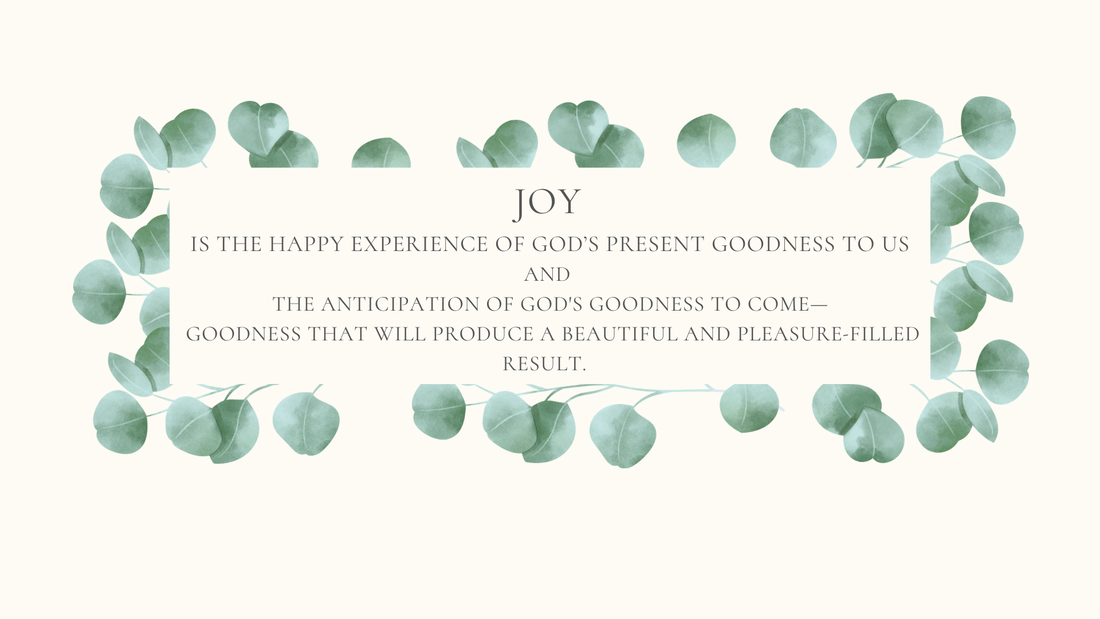
What is Joy?  

     In the Greek, the word is xairo, which is a cognate based on the word, “xaris,” which is the word for grace.  Grace is God’s “favorable leaning toward” us to deal with us in His kindness and goodness.  It's not something we can ear or deserve; rather, it is a free gift of God to us based on Christ's death. “Xairo,” then, means to be glad and delight in God’s favor and goodness that we never earned or deserved.
​  
 
     I like to think of it this way:   
 
Picture
     Joy is a beautiful mystery.  It co-exists with painful sorrow. In fact, present sorrow is the basis for joy because it is only through present work that we obtain future reward.  
      Some Christians believe that joy is not happiness: that joy is only a mental or spiritual decision.  I think that perhaps they believe this because the circumstances in which we are called to be joyful are so grief inducing.  It is the idea that we can only experience one emotion at a time.  
 
     There are other Christians who say you should only feel happy because of what Jesus has done. That any other sad emotion would be a lack of character, a wrong attitude, a lack of Christ-likeness.  Conversely, there are Christians who believe that, as Christ was the Man of Sorrows, so we should be sorrowful.  This is the mystery!   
     While Joy is a decision, we can sometimes be mistaken in the idea that we cannot be both happy about what will come and simultaneously sad about the painful and present circumstances which bring the good benefit.  But because God created us to be like Him, He has created us with the ability to experience multiple emotions at the same time. Paul said that he himself was “sorrowful, yet always rejoicing!” (2 Cor. 6:10) 
     I don’t enjoy being pregnant.  I don’t enjoy the joint pain, the morning sickness, the heartburn, the weight gain, the constant fatigue, and the painful labor.  I don’t enjoy the insomnia before the birth, or the waking up constantly after.  I didn’t enjoy the c-section, or the ear-splitting newborn cries through the long nights.  I didn’t enjoy the process of healing.   
     But I can tell you this: after having six biological children, I can’t help but smile with absolute delight when I get a positive pregnancy test!  I can’t help but get a rush of happy adrenaline when I feel that first contraction hit.  For me, the prospect of having a child for the rest of eternity, whether through miscarriage or a live birth, far outweighs the pain and suffering of the pregnancy, birth, and child-raising that is to come.  It is a joy that cannot be taken away.  

Picture
     It is HOPE that enables us to have this happy joy.  Paul stated that we are to be “joyful in hope, patient in affliction” (Rom. 12:12a).  He reminded us that “we do not sorrow as others do, who have no hope” (1 Thess. 4:13).  Though we experience every bit of pain and suffering that our counterparts in the world experience, even our sorrow is not the same as the world’s.  We know it isn’t the end.  We know that these painful circumstances produce immeasurable good in our lives (Rom. 8:28).    
      We are in the long process of a kitchen remodel due to the Beatchie Creek fires. Severely limited in our budget, it is still very much in the beginning stages, though it has been nine months.
​        In my mind’s eye, I have envisioned many times what it will look like, down to every detail.  I imagine what I will do in that kitchen.  Vases of wildflowers from the hill.  Morning coffees with Jeff.  Cooking with my son, Cyrus.  Family gathered.  Laughter.  Relationships formed and maintained. An oasis for the weary.  A place where the word of God is shared.   A place of hope, light, rest, and refreshing.  
 
     What does fixing my thoughts in joy on the finish do? 
Picture
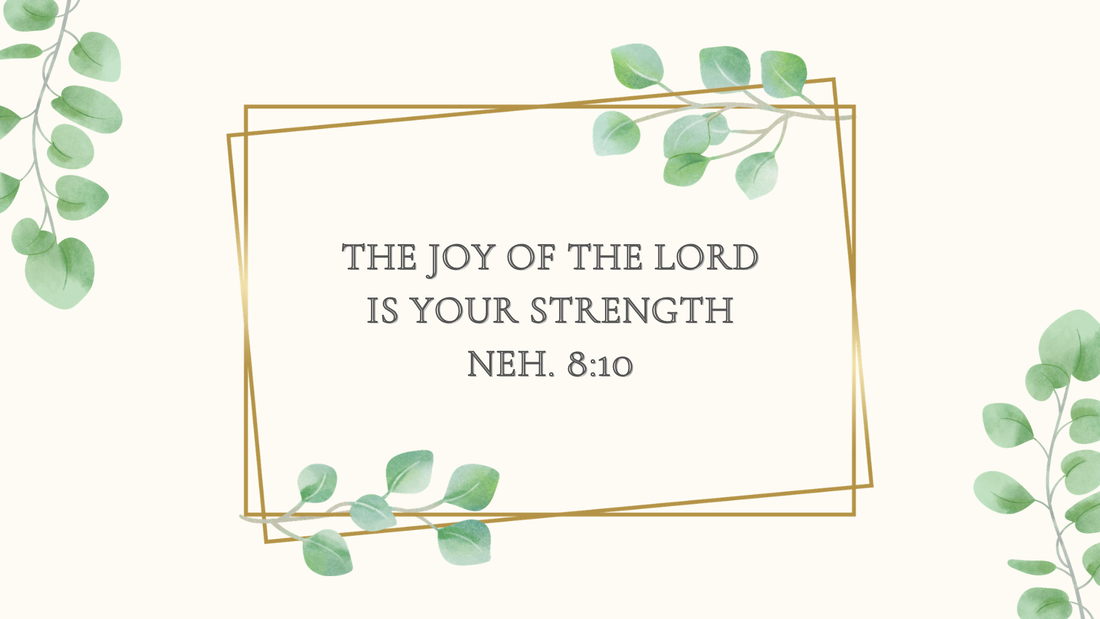
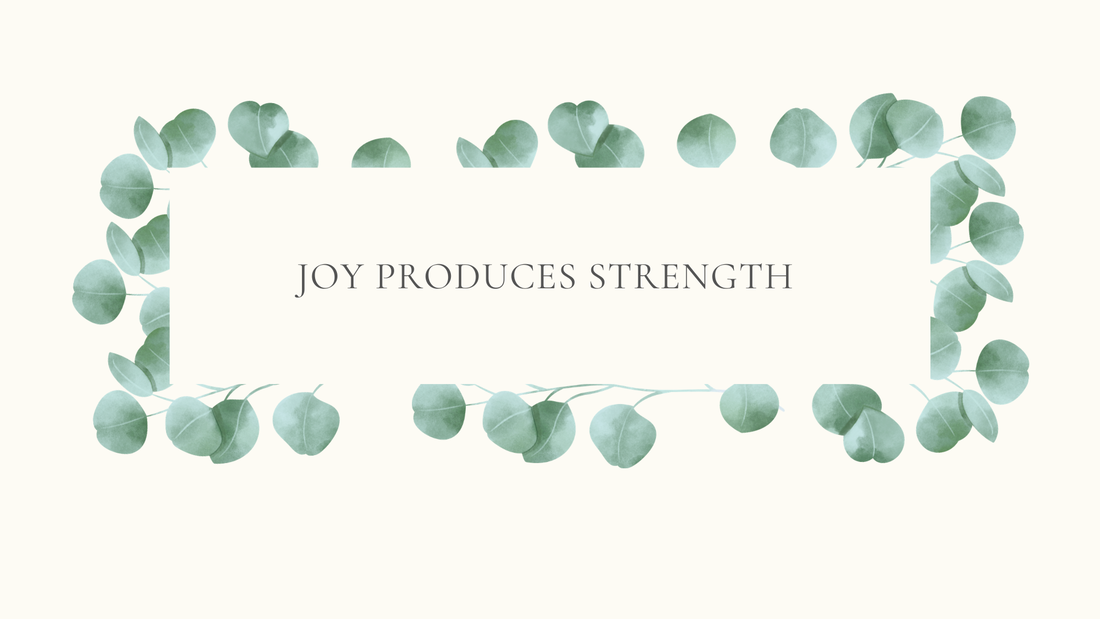
       When I know that this trial, this season, is producing a wonderful thing for me and for those I care about, it produces the strength to continue to complete each part of the task in front of me. 
     As we work through our remodel, there are many small and large tasks to complete.  It can feel overwhelming if I sink into the them.  Each day there is another small piece to finish. Each task really represents a multitude of smaller tasks.   
   I was talking about this with my mom (if I’m honest, it probably sounded more like complaining. 😉 ) and she gently reminded me that this would not be for the rest of my life.  In the scheme of things, a year spent in remodeling would be followed by many years of enjoyment.  She reminded me to keep putting my perspective on the hope of the end result, not on the present.   
     That perspective, though only an earthly and shallow one—it's just a kitchen—helps me to get up each day and work a little more on its completion.   


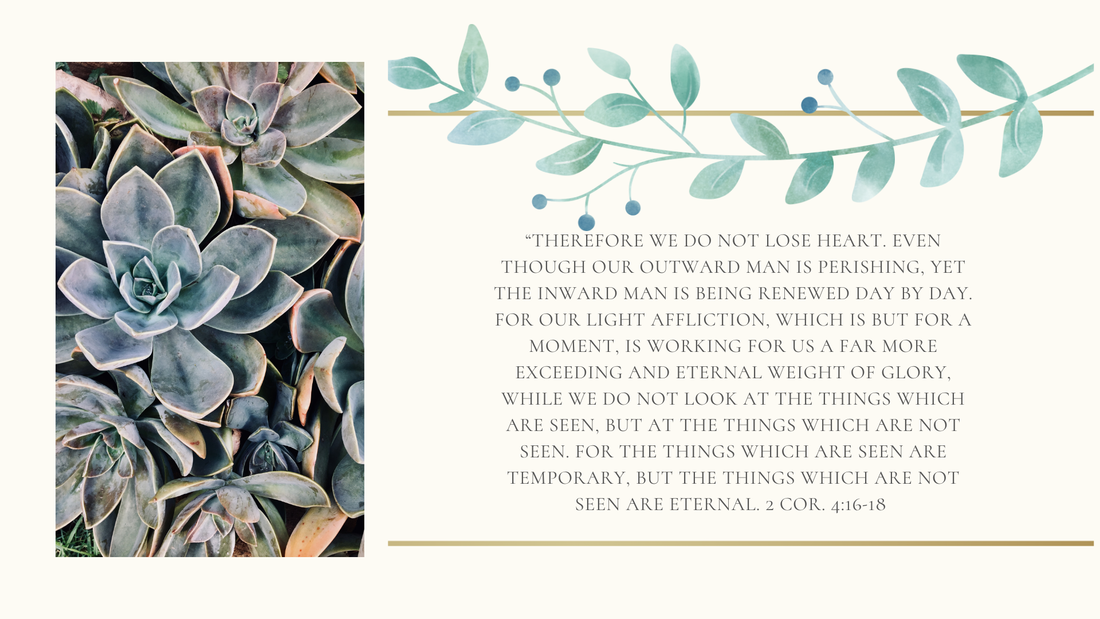
     Focusing on the hope at the end gives us the strength to work a little more with Jesus every day until the completion of our life.  


     Friends, this life is momentary.  It is fleeting.  From the perspective of eternity, life's timeline doesn’t even make it on the page.  We need to look “unto Jesus, who for the joy set before Him endured the cross, scorning its shame” (Heb. 12:2).  
​


    Looking away from all else to the joy of the Lord produces a happiness that cannot be mitigated or reduced by our present circumstances. 

...............Read the previous blog in the Fruit of the Spirit Series: "The Harvest of Love"
Picture

0 Comments
    Picture

    Author

    Halley Faville lives with her husband and children in their mountain home in Oregon. 

    ​As a homeschooling mother of 7 children, she enjoys spending her free time in  language arts, music, art, and outdoor activities.  

    Archives

    August 2025
    August 2024
    May 2024
    April 2024
    February 2024
    October 2023
    June 2023
    December 2022
    October 2022
    June 2022
    April 2022
    March 2022
    December 2021
    November 2021
    October 2021
    September 2021
    August 2021
    July 2021
    June 2021
    May 2021
    April 2021
    March 2021
    January 2021
    December 2020
    November 2020
    October 2020
    August 2020

    Categories

    All
    1 Samuel
    2 Chronicles
    40 Days Of Goliath
    Abraham
    Acts
    Children
    Christmas
    Cross
    David
    Deliverance
    Ecclesiastes
    Eph 5:22-23
    Exodus
    Faith
    Faithfulness
    Fall
    Favor
    Feasts
    Focus
    Fruit Of The Spirit
    Generosity
    Genesis
    Gentleness
    Gideon
    Goodness
    Gospel
    Hannah
    Harvest
    Healing
    Homeschool
    Isaac
    Jehoshaphat
    John
    Joy
    Judges
    Justice
    Kindness
    Kingdom
    Listen
    Live
    Love
    Luke
    Ministry
    Multiplication
    Nativity
    Parenting
    Passover
    Patience
    Peace
    Perseverence
    Power
    Praise
    Prayer
    Promise
    Redeemer
    Relationship
    Repentance
    Resolution
    Reward
    Salvation
    Sanctification
    School
    Strength
    Submission
    Suffering
    Transformation
    Trust
    Truth
    Victory

    RSS Feed

Photos from bangorvineyardshedmedia, JamesInDigital, wildrosetn39
  • Home
  • Halley Faville
  • Jeff Faville
  • Oaks Canyon Youth
    • Youth Sign-Up/Forms
    • How You Can Help!
  • Beth Bearden
  • About
  • Contact
  • Resources
  • Recommended Blogs